Impala Terminals
Views
Share With Friends
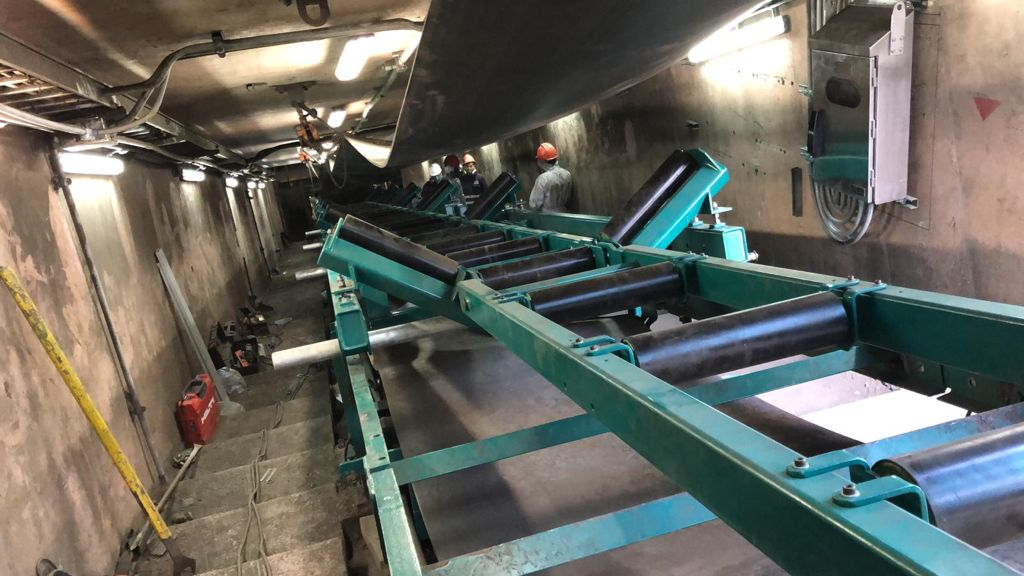
Impala Terminals at Callao Port in Lima, Peru, faced significant challenges in accurately measuring bulk materials during ship loading operations. The facility loads up to 30,000 tonnes per ship with cargo values often exceeding $50 million. To address these issues, they decided to install a CST 0.1% Belt Scale, aiming to enhance the precision of their cargo measurements, reduce financial risk, and ensure smooth international trade transactions.
“Impala Terminals have installed a OIML Class 0.2 Belt Scale at their Callao port facility. At this time, this belt scale may the best belt scale in the world.”
Issues on Site
The primary issue at Callao Port was the inaccuracy in measuring high-value metalliferous ores such as silver, lead, zinc, and copper. Factors such as wave action, salinity variation, hogging and sagging and reliance on human judgement led to margins of error. Traditional methods like draft surveys and standard belt scales often resulted in errors up to 1%, leading to substantial financial discrepancies. Given the high market prices of these ores, even minor inaccuracies could translate into significant monetary losses, undermining the confidence of buyers and sellers in trade transactions. With a typical parcel size of 10,000 tonnes and an average value of USD 2,000 per tonne, each parcel can represent up to USD 20 million, and a total cargo value per ship worth in the order of USD 50 million. Traditional belt scales with an error margin of 1% could result in discrepancies of up to USD 200,000.
CST Solution
Impala Terminals partnered with Control Systems Technology (CST) to install a belt scale that delivered on its promised accuracy. CST applied an application-engineering process, backed by expert installation, on-site supervision, and a custom testing protocol. The solution included the following components: Symmetrical Dual Redundant (SDR) Scale, On-Site Supervision, Custom OIML R50 Testing Process and Continuous, In-Service, Permanence Testing (CISPT).
CST Symmetrical Dual Redundant (SDR) Scale
The belt scale installed on Conveyor No. 6 at Impala Terminals is CST’s latest concept: the Symmetrical Dual Redundant (SDR-CSRR) Belt Scale. This design features two adjacent, independently calibrated weigh frames, each with two idlers and four C6-grade load cells. The space between the two frames forms the line of symmetry, allowing both sides to operate independently while verifying each other’s performance. Each weigh frame is accurate to ±0.1%, and the system is designed to maintain agreement between both sides within that range without ongoing adjustment, an objective that has been met since commissioning. The scale uses extended 3600 mm idler spacing, supported by CST’s Close Spaced Roller Rack (CSRR) and a robust design to maintain belt support and frame geometry, ensuring measurement accuracy. It includes two spiral cage tachometers and is controlled by CST’s latest-generation belt scale electronics, running in dual mode to manage and compare both weigh frames.
Custom Testing Process
To achieve OIML R50 Class 0.2 compliance, CST developed a detailed live load testing procedure in collaboration with Impala. Each test load was nominally 110 tonnes, with total allowable error under 100 kg, accounting for weighbridge variance, belt scale error, and material loss or gain. The test circuit was complex, requiring a fully mapped process for each transfer point. CST produced a 16-page plan adopted by Impala’s management. Between runs, all transfer points were cleaned, with collected material run as a single parcel at the end to ensure accuracy.
Product in This Project
Advertisement