DEWA Accelerates Expansion, Targets 200 Million BCM in Mining Capacity by 2027
Sun 25 Oct 2026, 09:20 AM
Share
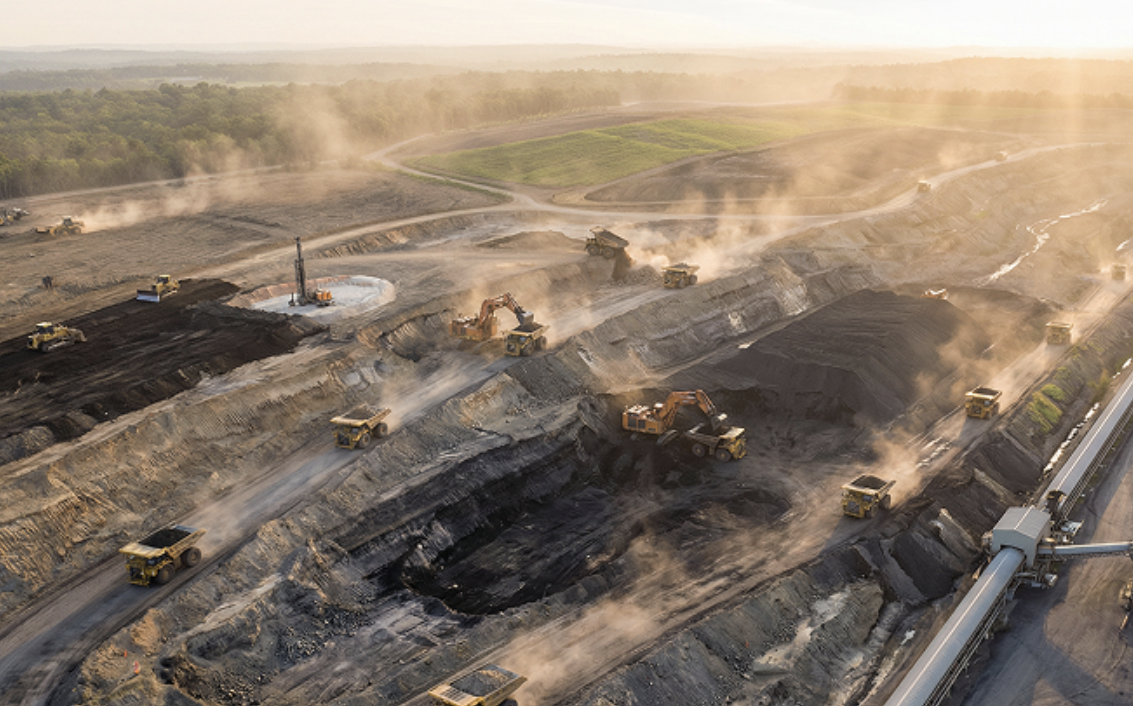
PT Darma Henwa Tbk (DEWA) is targeting an increase in overburden (OB) removal capacity to 200 million bank cubic meters (BCM) in 2027, up around 33.3% from this year's projected level. The target is supported by expanded mining operations, contributions from new contracts, and more efficient use of its own equipment fleet.
Amid efforts to expand its mining business, the Bakrie Group-affiliated mining contractor is also diversifying its revenue streams by establishing a new subsidiary in the logistics sector.
DEWA Director and Corporate Secretary Mukson Arif Rosyidi said the company established PT DH Logistik on October 22, 2026. Based in South Jakarta, the company will operate in freight forwarding services.
In an information disclosure to the Indonesia Stock Exchange (IDX) on October 23, 2026, Mukson explained that DH Logistik's business activities include organizing the shipment and packaging of goods in large volumes by rail, road, sea, and air.
“This business activity also covers the delivery of goods, both in bulk and individually, on behalf of clients” Mukson said.
According to him, the establishment of the subsidiary is part of a strategy to expand the logistics business, strengthen the corporate structure, and create new long-term revenue streams.
DEWA directly owns a 99.9% stake in DH Logistik. However, the company has yet to disclose the investment allocated for the establishment of the subsidiary.
Mining Capacity and New Contracts to Support Growth
DEWA's expansion comes as its operational and financial performance continues to grow. In the first nine months of 2026, DEWA recorded net profit of IDR 513.08 billion, up 114.5% from the same period a year earlier. Net revenue reached IDR 5.10 trillion, growing around 9.7% year-on-year.
Nevertheless, the profit was also supported by a fair value gain of IDR 229 billion recorded in the second quarter of 2026. Therefore, profit growth needs to be assessed alongside developments in the company's core operating performance.
Operationally, the use of its own heavy equipment fleet has become one of the key drivers of improved efficiency. The impact began to emerge after DEWA took over operations at the Bengalon mine in May 2026. The third quarter of 2026 marked the first full quarter in which all the operations in question were managed in-house.
In the third quarter of 2026, DEWA's EBITDA reached IDR 626 billion, up 27.5% from the previous quarter. Its EBITDA margin also improved to 33%, from 29.6% in the second quarter of 2026.
Cumulatively, EBITDA in the first nine months of 2026 stood at IDR 1.56 trillion, growing 30.7% year-on-year. Performance was also supported by lower rainfall and more efficient fuel consumption.
The company estimates that OB removal volume will reach around 150 million BCM in 2026, comprising approximately 139 million BCM from the KPC and Arutmin mines, along with an additional 8 million–10 million BCM from the Sebuku Sejaka Coal (SSC) project. Total material moved is expected to exceed 160 million BCM, compared with 148 million BCM in 2025.
DEWA's monthly OB removal capacity has also increased. In September 2026, capacity reached around 14 million BCM, up from 11.9 million BCM in May 2026 and 6.6 million BCM in early 2024. Meanwhile, coal production capacity has reached approximately 1.7 million tons per month.
Sebuku Project and New Contract Opportunities
One of DEWA's key growth drivers is the SSC project. The company signed a contract worth USD 1.3 billion with a five-year term in June 2026. Coal shipments from the project began in October 2026.
For 2026, DEWA is targeting SSC coal production of 800,000–900,000 tons and OB removal of around 8 million - 10 million BCM. In 2027, coal production could increase to around 3 million tons, while OB removal is targeted at 30 million - 35 million BCM, subject to additional production quotas.
If it operates at its planned full capacity, SSC could generate around IDR 4 trillion in annual revenue. The project is also expected to add up to approximately 55 million BCM in annual OB removal at full capacity, with rates around 30% higher than the rates the company typically earns.
In addition to SSC, DEWA is exploring coal mining contract opportunities in South Sumatra. The company is reportedly in the final bidding stage for four work packages with a combined value of around IDR 17 trillion. The tender winners are expected to be announced in November–December 2026.
If it wins one or two of the work packages, DEWA could secure an additional OB removal volume of around 30 million BCM. Together with contributions from SSC and expanded in-house operations, the additional work could support the target of approximately 200 million BCM in OB removal capacity in 2027.
Another opportunity comes from a nickel mining project in East Halmahera, with a potential volume of around 72 million BCM. The project could commence in the first quarter of 2027, although its implementation remains contingent on approval of the Work Plan and Budget (RKAB).
In the long term, DEWA is also targeting opportunities for additional work at the KPC mine. Support from a new, more fuel-efficient fleet could unlock an additional work volume of up to 150 million BCM, although realization will depend on contract developments and operational requirements.
Analysts Project Profit Growth, Set Different Price Targets
Increased capacity, operational efficiency, and opportunities for new contracts have led several analysts to project profit growth for DEWA in 2027. However, financial projections and share price targets vary among research firms.
In a research report dated October 21, 2026, UOB Kay Hian analysts Benyamin Mikael and Alden Gabriel Lam projected DEWA's core net profit to reach IDR 1.05 trillion in 2027, a 101.4% year-on-year increase.
Despite an improved operational outlook, UOB Kay Hian lowered its price target for DEWA to IDR 780 per share from IDR 1,260 previously. The firm maintained its buy recommendation.
The price target adjustment was primarily driven by an increase in the assumed weighted average cost of capital (WACC) to 10.6% from 8.3%, as well as more conservative profit projections due to higher financing and operating costs. UOB also cut its net profit forecasts for DEWA in 2026 and 2027 by 21% and 13.5%, respectively.
Meanwhile, BRI Danareksa Sekuritas projected DEWA's net profit to reach IDR 1.64 trillion in 2027, up 142.6% from its 2026 estimate of IDR 676 billion.
BRI Danareksa Sekuritas analysts Erindra Krisnawan and Taufan Fadhillah projected the company's revenue to increase from IDR 7.22 trillion in 2026 to IDR 11.78 trillion in 2027. EBITDA is also projected to grow 86.4% to IDR 4.04 trillion.
BRI Danareksa Sekuritas set a price target of Rp530 per share for DEWA, with a buy recommendation. The valuation uses the sum-of-the-parts (SOTP) method, which assesses the value of each of the company's businesses or assets.
Analysts also believe additional contracts could boost revenue and profitability potential beyond the base-case scenario. However, these projections remain dependent on DEWA's success in winning tenders, increasing work volumes, and maintaining cost efficiency.
In addition, potential opportunities in the copper segment and the development of Gayo Mineral's resources could provide additional value over the long term. Nevertheless, these opportunities are not yet fully reflected in analysts' base-case projections.
Operational Risks Remain
Despite the growth outlook, DEWA continues to face several risks that could affect its ability to meet its 2027 targets. Seasonal rainfall could disrupt mining activities and weigh on overburden (OB) removal volumes, particularly in the fourth quarter of 2026.
Other risks include project implementation delays, higher capital expenditure, elevated financing costs, margin declines, and regulatory changes. Failure to secure additional production quotas or new contracts could also limit the planned capacity expansion.
Differences in profit projections and price targets from UOB Kay Hian and BRI Danareksa Sekuritas highlight differing assumptions regarding costs, revenue, and the execution of DEWA's expansion plans. Accordingly, projected growth should be distinguished from performance already realized.
Through the establishment of DH Logistik, the expansion of in-house operations, and the development of mining contracts, DEWA is seeking to scale up its business while diversifying its revenue sources. However, the logistics subsidiary's financial contribution remains uncertain, as its investment value and revenue targets have not been disclosed.
Ultimately, the success of the expansion strategy will depend on contract realization, the achievement of production targets, and the company's ability to maintain efficiency and profitability amid operational and financing risks.
Advertisement