Indonesia's Mining Non-Tax Revenue Reaches Rp141 Trillion in 2026
Tue 03 Nov 2026, 14:36 PM
Share
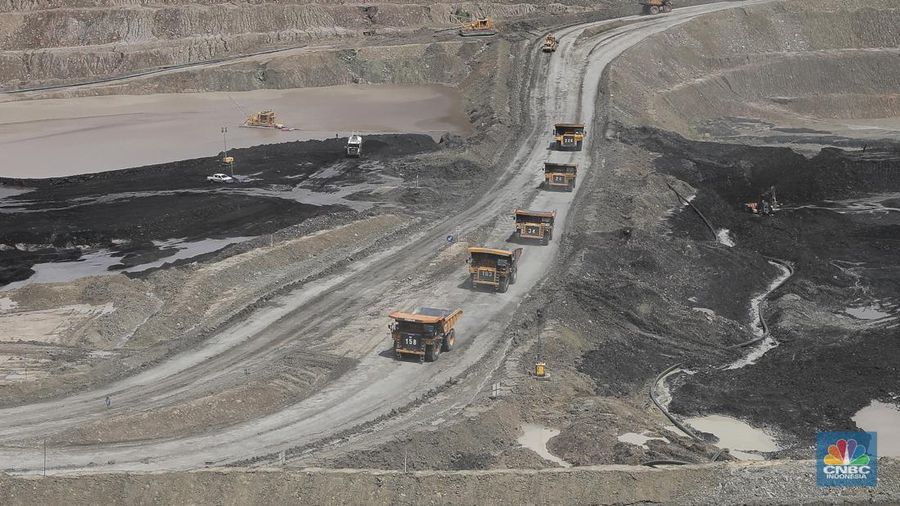
Indonesia's Coordinating Minister for Downstreaming and Energy Transition, Bahlil Lahadalia, has set a target for non-tax state revenue (PNBP) from the mineral and coal mining sector to reach IDR 160–165 trillion by the end of 2026. As of October 1, 2026, mining sector PNBP had reached IDR 141 trillion.
Bahlil, who also serves as Minister of Energy and Mineral Resources (ESDM), explained that the increase in state revenue would be supported by contributions from domestic mining companies. According to him, cooperation between the business sector and the government has consistently contributed to higher state revenue from mining activities.
"Our PNBP in 2025 was approximately IDR 130 trillion to IDR 135 trillion, and as of October 1 this year, it has already exceeded IDR 141 trillion. We are targeting IDR 160–165 trillion by the end of 2026," Bahlil said during the Minerba Convention & Exhibition (Convex) 2026 at JIExpo on Monday (November 2, 2026).
The increase in state revenue has been supported by adjustments to the Mining Work Plan and Budget (RKAB) policy, aimed at maintaining a balance between global supply and demand.
Indonesia accounts for approximately 43% of global coal trade, supplying around 540 million tonnes out of the total 1.3 billion tonnes traded worldwide. According to Bahlil, the country's coal export quota management strategy has helped push the price of coal with a calorific value of 6,333 kcal/kg to USD 154 per tonne.
"Rather than allowing foreign markets to determine our prices, we should recognize that our 540 million tonnes account for 43% of global coal supply. Therefore, we need to maintain a balance between supply and demand by reducing RKAB production quotas. What happened as a result? Coal prices have now reached USD 154 per tonne for coal with a calorific value of 6,333 kcal/kg. This is our strategy," he explained.
The government also plans to strictly implement production quota adjustments through the RKAB mechanism for nickel commodities.
According to government data, global nickel demand stands at approximately 3.5 million tonnes annually. However, the market is currently experiencing an oversupply approaching 800,000 tonnes due to high production volumes.
"Director General, I believe the strategy of managing supply and demand through RKAB must also be implemented for nickel. I will take responsibility for this decision in the interest of the nation. Do not hesitate. I understand that there will be objections," Bahlil emphasized.
Advertisement