Vale Indonesia Strengthens Good Mining Practices to Advance Sustainable Mining
Wed 24 Jun 2026, 17:35 PM
Share
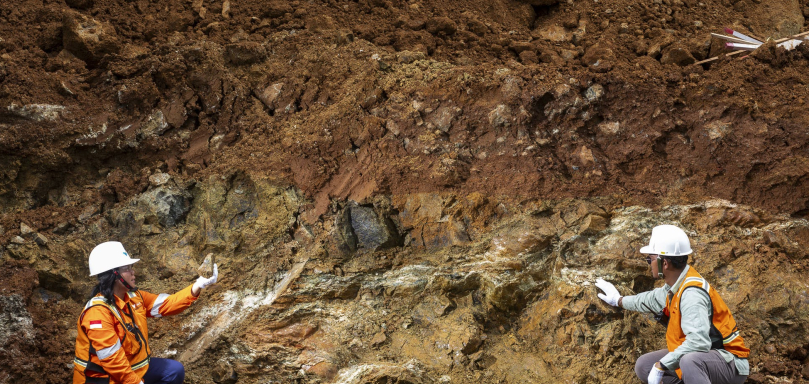
The implementation of Good Mining Practice (GMP) has been identified as key to addressing the increasingly complex challenges facing the mining industry, ranging from environmental and social issues to the need to supply critical minerals to support the energy transition.
The issue was highlighted during a talk show titled Sustainability Mining for the Future: Technical Excellence, Innovation, and Good Mining Practices, organized by PT Vale Indonesia Tbk in collaboration with the Bandung Institute of Technology (ITB) and supported by the Ministry of Energy and Mineral Resources (ESDM) in Bandung.
Ari Hendarwanto, Mineral Conservation Coordinator at the Directorate of Mineral and Coal Engineering and Environment of the Ministry of Energy and Mineral Resources, said the implementation of Good Mining Practice must serve as the primary foundation for mineral resource management in Indonesia.
According to him, mineral conservation is not only focused on the efficient utilization of resources but also includes optimizing value addition, reducing environmental impacts, and strengthening sustainable mining governance.
"The implementation of Good Mining Practice is an important foundation to ensure that the utilization of mineral resources delivers optimal benefits for the country while maintaining environmental and social sustainability," Ari said.
M. Slamet Sugiharto, Director and Chief Strategy and Technical Officer of PT Vale Indonesia Tbk, said the sustainability of the mining sector is determined not only by compliance with regulations but also by the industry's ability to integrate innovation, technology, and data-driven decision-making.
According to him, sustainable mining practices must be built through a long-term approach that prioritizes a balance between operational performance, environmental protection, and value creation for communities.
"Technical excellence and innovation must go hand in hand with environmental and social responsibility. The future of Indonesia's mining industry depends on our ability to implement Good Mining Practices consistently and sustainably," Slamet said.
Ahmad Ihsan, a lecturer at the Faculty of Mining and Petroleum Engineering (FTTM) at ITB, said collaboration between universities and industry must continue to be strengthened to accelerate the development of safer, more efficient, and more sustainable mining technologies.
According to him, expertise in digital technology, artificial intelligence, ventilation systems, and mine safety will become essential competencies for the next generation of mining engineers.
Meanwhile, Prof. Irwan Meilano, ITB's Vice Rector for Academic and Student Affairs, said universities have a strategic role in preparing human resources who are not only technically competent but also aware of sustainability and social responsibility.
He said collaboration among academia, industry, government, and students is an important foundation for building an innovative and sustainable mining ecosystem.
According to data from the Ministry of Energy and Mineral Resources, the mining sector contributed around 8.5% to 9% of Indonesia's gross domestic product (GDP) in 2025. Meanwhile, non-tax state revenue (PNBP) from the mineral and coal sector reached IDR 130.2 trillion.
Despite this contribution, the mining sector continues to face a number of challenges, including carbon emissions, social impacts on communities surrounding mining areas, and post-mining environmental management. Therefore, strengthening technological innovation, enhancing human resource capabilities, and implementing Good Mining Practice are considered key factors in maintaining both the competitiveness and sustainability of Indonesia's mining industry.
Advertisement