Five Regional Parliaments in Indonesia’s Nickel Belt Agree to Form Strategic Alliance
Mon 08 Dec 2025, 08:03 AM
Share
Five of Indonesia’s largest nickel-producing provinces have agreed to form the Nickel-Producing DPRD Forum as a regional political alliance to strengthen bargaining power within the national downstreaming ecosystem and mining governance.
The forum was established at the Central Sulawesi DPRD office on Sunday (Dec 7) and was attended by Deputy Minister of Energy and Mineral Resources (ESDM), Yuliot.
It brings together DPRDs from Central Sulawesi, Southeast Sulawesi, South Sulawesi, North Maluku, and Southwest Papua—five regions that contribute the most to Indonesia’s nickel production and processing.
Deputy Minister Yuliot applauded the initiative. He stressed that cross-provincial DPRD collaboration can serve as an instrument for oversight, regulatory harmonization, and stronger policy proposals in the nickel sector, which has long underpinned the economy of Eastern Indonesia.
“Nickel is a strategic natural resource with finite reserves. Its management must provide the greatest possible benefit to the people, as mandated by Article 33 of the 1945 Constitution,” Yuliot said.
He added that the forum will strengthen regional voices in advocating for sustainable development needs, including value addition in nickel downstreaming, which is a national priority.
365 IUPs and 79 Smelters: A Snapshot of Indonesia’s Nickel Industry Scale
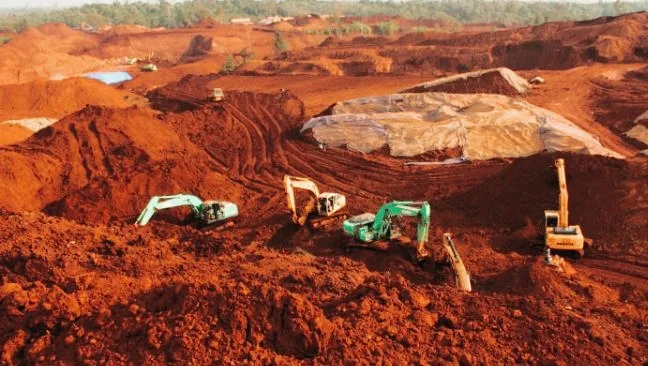
Yuliot revealed that as of 2025 there are 365 nickel Mining Business Licenses (IUP) spread across six provinces. Meanwhile, 79 smelters are in operation, 74 are under construction, and 17 are in planning.
Downstreaming, as mandated by Law No. 2/2025, requires that all mineral commodities be processed domestically.
According to Yuliot, this policy is the foundation of the economic transformation toward Golden Indonesia 2045.
“Since the nickel ore export ban in 2020, Indonesia’s nickel and derivative export value has surged more than tenfold—from USD 3.3 billion in 2017 to USD 33.9 billion in 2024,” he said.
The government projects that by 2040, downstreaming will generate USD 618 billion in cumulative investment, create 3 million new jobs, and significantly boost GDP and the export value of processed minerals.
Environmental Pressures & Good Mining Practice
Despite its vast economic potential, the Deputy Minister underscored the importance of good mining practice across all nickel mining and processing activities.
He called on companies to apply high standards of environmental management, including post-mining land rehabilitation, carbon-emission control, and robust pollution-prevention measures.
Regional Voices Must Be Heard Nationally
Central Sulawesi DPRD Speaker Mohammad Arus Abdul Karim described the Nickel-Producing DPRD Forum as a strategic step to champion regional interests amid the rapid expansion of the national nickel industry.
“This forum unites the voices of nickel-producing regions to advocate more forcefully for local interests at the national level,” Arus emphasized.
He noted that while regions host strategic industries, they often do not receive a commensurate share of infrastructure development, environmental quality improvements, or equitable economic benefits.
China’s Dominance in Indonesia’s Nickel Industry
In parallel with this political consolidation by five regional parliaments, the issue of China’s dominance in Indonesia’s nickel supply chain continues to draw global attention.
Roughly 75% of Indonesia’s nickel refining capacity is now controlled by Chinese corporate networks through the Belt and Road Initiative (BRI)—from IMIP in Central Sulawesi, to IWIP in North Maluku, and VDNI in Konawe.
The formalization of the DPRD alliance signals Indonesia’s move to reinforce domestic political structures to increase national control over downstreaming, improve environmental governance, and raise regional revenues.
New Direction: Indonesia, Nickel, and the Global Contest
The creation of this regional parliamentary alliance could be an important foundation for improving Indonesia’s bargaining position amid: US–Europe vs China competition across the EV supply chain, environmental sustainability pressures, the need to consolidate mining governance, and the national ambition of full downstreaming.
As the geopolitics of critical minerals grow more complex, the voices and roles of nickel-producing regions will increasingly shape the future of Indonesia’s nickel industry—both for local economic stability and for the country’s position on the global stage.
Source: https://mediasultra.com/parlemen-5-daerah-penghasil-nikel-di-indonesia-sepakat-bangun-aliansi
Advertisement