Indonesia's Coal-to-Ethanol Investment Plan Reaches IDR 32.8 Trillion
Thu 19 Nov 2026, 10:24 AM
Share
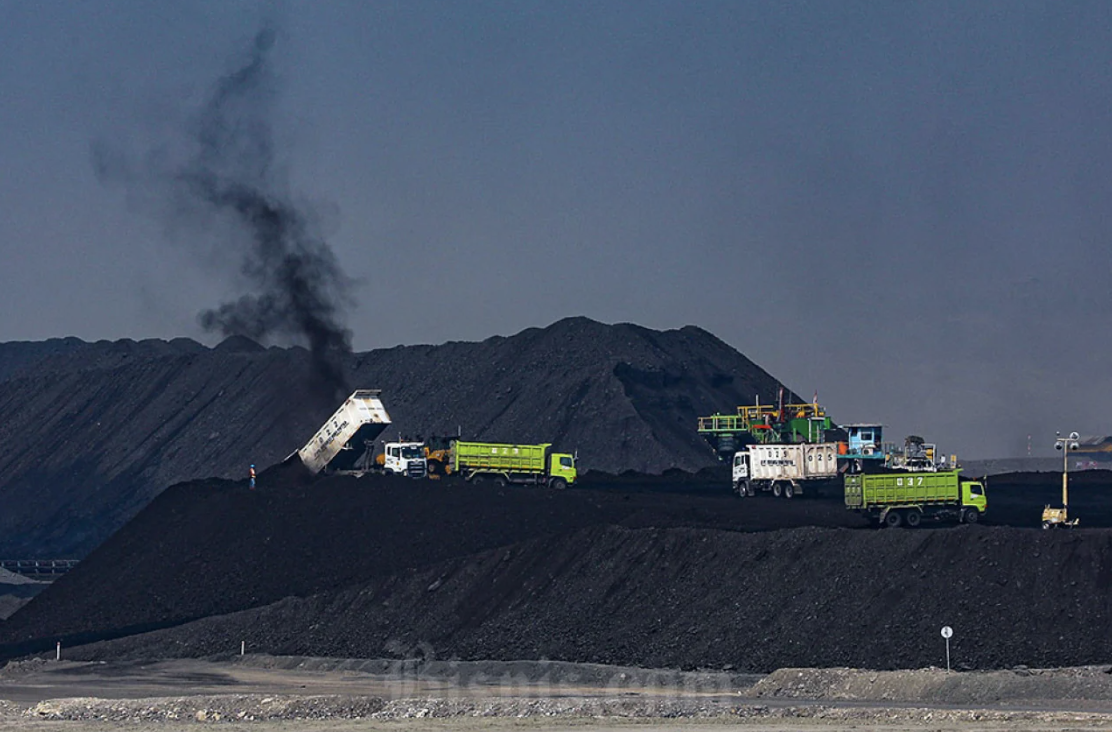
A technology development partnership between Indonesia and China to convert coal into ethanol is expected to create new opportunities to accelerate coal downstream processing in Indonesia.
The coal-to-ethanol technology partnership carries an investment value of USD 1.8 billion, equivalent to IDR 32.8 trillion, based on an assumed exchange rate of IDR 18,270 per USD.
The partnership involves Indonesia's Ministry of Higher Education, Science and Technology, PT Pertamina (Persero), and Beijing Petrochemical Engineering Co., Ltd.
Bisman Bhaktiar, Executive Director of the Centre for Energy and Mining Law Studies (Pushep), believes the partnership could provide momentum for the implementation of Indonesia's coal downstream processing initiatives.
"This partnership opens up new opportunities to accelerate Indonesia's coal downstream processing. What matters most is ensuring that the cooperation is implemented and does not remain merely a commitment under a memorandum of understanding (MoU)," Bisman told Bisnis on Thursday (19 November 2026).
According to Bisman, Indonesia has significant potential due to its abundant low-calorific-value coal reserves. At the same time, demand for ethanol in the energy and industrial sectors continues to present opportunities.
The coal-to-ethanol technology project also offers an alternative for diversifying downstream coal products. This would allow coal to be processed into higher-value products rather than being sold solely as a raw commodity.
"The government needs to ensure that technology transfer genuinely takes place, assess the project's economic feasibility, and ensure that the resulting products can compete without relying on subsidies. Environmental considerations must also receive serious attention," Bisman explained.
Meanwhile, Idham Fachri, Senior Analyst at the Energy Shift Institute, believes it is too early to describe the Indonesia–China partnership as a significant step towards implementing coal downstream processing, as the initiative is currently limited to the signing of an MoU.
"We still need to see more concrete developments in the next stages. Indonesia has previously pursued similar initiatives, some of which reached more advanced stages but were ultimately cancelled. Therefore, this partnership requires further assessment," Idham said.
Nevertheless, Idham acknowledged the potential of coal-to-ethanol technology development, particularly as the government is encouraging greater ethanol use in petrol blending.
He noted that this policy could increase domestic ethanol demand. However, the project's economic, environmental, and technological feasibility, along with other relevant factors, must be carefully evaluated.
"From an economic perspective, the government needs to compare the production costs of this project with those of alternative options," Idham added.
He cautioned against a situation in which reduced imports lead to significantly higher domestic production costs, forcing Pertamina to absorb the difference.
"Ultimately, these additional costs would have to be borne either by consumers through higher fuel prices or by the government through subsidies and compensation," Idham explained.
The coal-to-ethanol partnership forms part of four strategic agreements between Indonesia and China, with a combined investment value and commitments totalling USD 71.8 billion, equivalent to more than IDR 1,300 trillion.
Regarding coal-to-ethanol technology development, Coordinating Minister for Downstreaming and Energy and Minister of Energy and Mineral Resources (ESDM) Bahlil Lahadalia said the initiative aligns with the government's policy direction, particularly its efforts to optimise domestic energy resources while reducing fuel imports.
According to Bahlil, cooperation with China presents a significant opportunity, as Indonesian coal has traditionally been used primarily for power generation or exported as a raw commodity.
"Through coal-to-ethanol technology, we aim to create opportunities to process coal into higher-value products while providing an alternative to strengthen national energy security," Bahlil said in an official statement on Thursday (19 November 2026).
The government has also been exploring the use of coal as an alternative energy source. Bahlil previously revealed that several Chinese companies had proposed partnerships to develop technologies capable of converting low-calorific-value coal into gas and liquid fuels.
He said these proposals align with President Prabowo Subianto's directive to optimise domestic energy resources, strengthen energy security, and reduce dependence on imported fuel.
Bahlil explained that Indonesia has substantial low-calorific-value coal resources that could be developed through various advanced processing technologies. Coal-to-ethanol technology represents one opportunity to diversify downstream coal products, reducing reliance on power generation and export markets.
In China, coal-to-ethanol technology has already been commercially implemented and developed on an industrial scale. The resulting ethanol can be used as a feedstock for the chemical industry, including the production of solvents and various chemical derivatives, as well as for blending with petrol.
Bahlil noted that the technology also offers an alternative method of producing ethanol without relying on food-based feedstocks.
Beyond attracting investment, the partnership with China is expected to accelerate Indonesia's development of domestic coal processing capabilities.
He emphasised that technology transfer is essential to ensure downstream industrial development not only produces higher-value products but also strengthens national industrial capabilities and workforce skills.
"The most important aspect of this partnership is not merely its investment value, but also our ability to master and develop the technology domestically. We want downstream processing to deliver tangible benefits, create jobs, increase added value, and reduce dependence on energy imports," Bahlil emphasised.
Advertisement