Kobexindo Hands Over Sibilia S24D Vacuum Truck to Freeport Indonesia Smelter
18 Sep 2024, 03:00 PM 3940

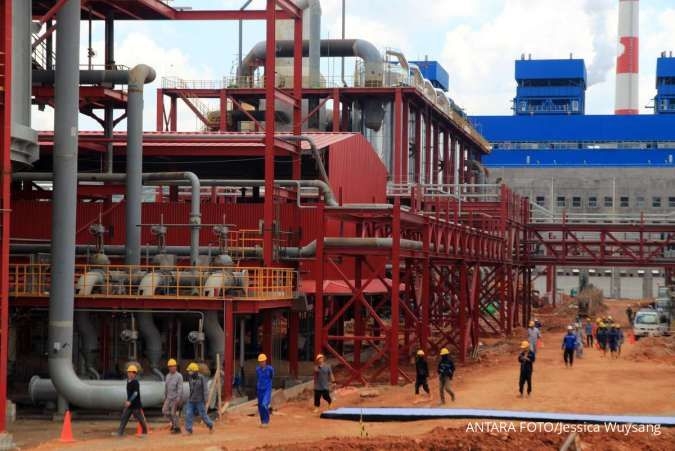
PT Kobexindo Equipment ("KOBE"), a subsidiary of PT Kobexindo Tractors Tbk (IDX: “KOBX”), has delivered two units of SIBILIA truck Vacuum S24D to PT Freeport Indonesia (PTFI)'s smelter in Gresik, East Java. These industrial heavy equipment trucks, mounted on a 6x4 diesel truck with a 7,684 cc engine, use a 4-stroke in-line diesel engine adhering to Euro 4 emission standards, designed to support operational mobility.The SIBILIA truck Vacuum S24D is an Italian-made vacuum machine with over 80 years of experience. Powered by a 136HP auxiliary diesel engine, it generates a suction force of 8,300DaPa. The machine is equipped with a 10m3 dust/waste collection tank and holds an ATEX certification (Atmospheres Explosible), meeting European Union standards for products used in potentially explosive environments.Suryanto, Director of PT Kobexindo Equipment, expressed pride in supporting Freeport Indonesia's zero-waste policy and maintaining high standards of Health, Safety, and Environment (HSE) across all its operational areas.The S24D's strong suction power is designed for large-scale industrial waste management, helping Freeport manage waste efficiently, reduce downtime, and maintain cleanliness in the smelter area.PTFI’s second smelter was inaugurated on June 27, 2024. Copper cathode, the smelter's primary product, serves as raw material for various downstream industries, including cables, electronics, and electrical sectors.Kobexindo's Performance Highlights: Strengthening Non-Mining SegmentsIn the S1 2024, Kobexindo’s heavy equipment unit sales reached IDR 499.93 billion, contributing 56.25% to the company's consolidated total revenue, the highest among its business segments. This growth was driven by strong sales performance across various business sectors.“Kobexindo remains committed to strengthening its non-mining segments, including the manufacturing sector, with a focus on providing environmentally friendly heavy equipment. Through KOBE, the company offers environmental solutions, material handling, and logistic solutions. This reflects Kobexindo’s commitment to supplying high-quality equipment tailored to industry needs while supporting environmentally responsible business practices,” explained Gabrielle Azelia, Corporate Secretary of PT Kobexindo Tractors Tbk.

Indonesia’s Adaro Plans USD 2.5 Billion Coal Sale in Green Turn
18 Sep 2024, 02:59 PM 5277

PT Adaro Energy Indonesia plans to spin off a coal mining unit valued at USD 2.45 billion as part of its shift away from the fossil fuel.The company, which is one of country’s biggest coal miners, aims to offload its 99.9% stake in Adaro Andalan Indonesia and will seek shareholder approval for the plan on Oct. 18, according to a local exchange filing late on Wednesday. Shares in Adaro rose as much as 15.1% on Thursday, the most in more than two years.Indonesian coal miners have been boosting their investment in areas like metals and green energy to benefit from the energy transition. Adaro is building an aluminum smelter in Kalimantan, although the fossil fuel still accounts for more than 90% of its revenue. Other firms like PT Harum Energy and PT United Tractors have bought into the country’s rapidly expanding nickel sector.The Southeast Asian nation remains the world’s top exporter of thermal coal, used in power stations, and continues to rely on it for most of its domestic energy needs. An international plan to finance its shift away from the fossil fuel has stalled since being launched in 2022.Adaro said in the filing that separating its core coal business from its expanding minerals and green energy segments will allow it to access more sources of finance. The sale will be conducted as part of a public offering in which shareholders in the parent company may participate. The company has committed to boosting its non-coal revenue to more than half by the end of the decade, and plans to keep output of the fossil fuel flat this year.

Indonesia breaks ground on first renewable energy-powered EV battery factory
18 Sep 2024, 02:58 PM 4301

(IANS) Indonesia has inaugurated its first electric vehicle (EV) battery factory, which will operate entirely on renewable energy at the Neo Energy Morowali Industrial Estate in Central Sulawesi.Coordinating Minister for Economic Affairs Airlangga Hartarto said on Saturday that the factory was part of the critical minerals downstream policy aimed at boosting national economic competitiveness, improving public welfare and utilising environmentally friendly technology, Xinhua news agency reported.“Successful downstream processing of nickel has significantly boosted the export value of nickel derivatives, rising from USD 4.31 billion in 2017 to USD 34.44 billion in 2023,” Airlangga said at the event.With abundant mineral resources especially nickel, Indonesia holds substantial potential for EV battery production, with an estimated annual capacity of 210 GWh.The factory’s high-pressure acid-leaching smelter will process nickel ore into mixed hydroxide precipitate (MHP), a key material for EV battery cathodes, adding 120,000 tons of MHP to the country’s production capacity each year.The Investment Ministry revealed that as of June 2024, the total investment in nickel downstream activities, particularly smelter and EV battery factory development, has reached USD 30 billion in the country.On May 6, Indonesian President Joko Widodo had told the media that the first electric vehicle (EV) battery factory in the country will begin operating in June.Speaking at the EV exhibition of the Indonesian Electric Vehicle Industry Association or Periklindo Electric Vehicle Show in 2024, he emphasised that the factory’s operation signals that the domestic environmentally friendly vehicle ecosystem is starting to form in the country.The factory which is said to be owned by PT Hyundai LG Industry (HLI) Green Power, is located in Karawang, West Java, with a maximum capacity of up to 10 GW per hour and is capable of producing 32.6 million battery units.The Indonesian President said that Indonesia currently hosts 59 electric vehicle manufacturers, with plans for expansion in the pipeline.According to him, with current infrastructure, Indonesia can make up to 1.6 million electrical motorbikes yearly.However, the production of new electric motorbikes is 100,000 motorbikes now, so Indonesia sees room to develop the industry.

How Indonesia’s Nickel and Cobalt Will Shape the Next Generation of Technology
18 Sep 2024, 02:57 PM 6096

Indonesia, with the world's largest nickel reserves, is now at the center of the global industrial spotlight. In addition to nickel, Indonesia also holds significant reserves of another critical mineral—cobalt. These two minerals form the cornerstone of future technological development, particularly in the rapidly growing electric vehicle battery industry.In recent years, nickel has emerged as one of the most sought-after commodities globally. Major corporations, including Tesla, have shown significant interest in nickel, as it is a key material in electric vehicle battery production."Nickel falls into the category of critical minerals, which are essential in shaping the future of technology," said Muhammad Toha, General Manager of Permitting and Compliance at PT Merdeka Copper Gold, during the 2024 Media Mining Workshop in Surabaya, as reported on Saturday (14/9/2024).Merdeka Copper Gold recently acquired a nickel mine in Sulawesi and established Merdeka Battery Materials as part of its broader strategic plan.However, nickel is not the only important mineral in Indonesia. Each time nickel is discovered, cobalt is almost always found alongside it. "Cobalt is a far rarer mineral compared to nickel, and its distribution is very limited. Indonesia is fortunate to have significant cobalt reserves," Toha added.Though less well-known than nickel, cobalt plays an equally important role. It is used in the production of lithium-ion batteries, a key component in many future technologies, from smartphones to electric vehicles. The combination of nickel and cobalt positions Indonesia as a strategically important player in the global technology supply chain.Indonesia holds about 20% of the world's total nickel reserves, followed by Australia and Russia. This advantage makes Indonesia a key player in the global market.In recent years, Indonesia's nickel production has seen a significant increase, making it one of the largest nickel processing countries after China.“Although China is the largest nickel processing producer, they do not have their own nickel reserves. Most of the nickel raw materials they process are imported from countries like Indonesia and the Philippines,” he explained.The demand for nickel and cobalt is expected to continue increasing until 2030. In the past, nickel was primarily used for stainless steel production. However, this trend has shifted with the rising demand for electric vehicles. Advanced electric vehicle batteries require large amounts of nickel and cobalt, making these minerals crucial for the future.Despite this enormous potential, challenges remain. Resistance to mining activities continues to be an issue in some communities. “Opposing mining in extreme terms is akin to rejecting the technology of the future. There can be no technological advancement without critical minerals,” Toha said.However, he also highlighted the importance of strict oversight in the mining industry. "If mining is not properly supervised, the impact can be very damaging. We are committed to being a responsible mining company for a more sustainable future," he added.With the immense potential of nickel and cobalt, Indonesia has a significant opportunity not only to become a key player in the global technology industry but also to enhance the welfare of its people through the wise management of natural resources. These critical minerals are not just about the present—they are about the future of technology and the progress of human civilization.

PT Timah Allocates IDR 37 Billion to Enhance Tin Reserve Exploration
18 Sep 2024, 02:54 PM 5060

PT Timah Tbk allocated IDR 37 billion in August 2024 to optimize the management of tin ore resources and reserves both on land and at sea to meet global market demands.“This exploration is not just about discovering new reserves but also a key part of the company’s sustainability strategy,” said PT Timah Tbk’s Head of Corporate Communications, Anggi Siahaan, in Pangkalpinang, Bangka Belitung (Babel), on Friday.He explained that PT Timah's exploration activities at sea included exploratory drilling and mine guidance using five drilling vessels.“On land, exploration activities include primary land drilling and topographic surveys,” he added.Anggi emphasized that exploration is a strategic step to ensure the continuity of the mining industry. However, it is not only about expanding production but also about balancing the utilization of natural resources with environmental preservation.“PT Timah is also continuously working to improve exploration, mining, and processing technologies as part of efforts to ensure the company’s sustainability,” he said.He noted that optimal management of tin mineral reserves, adhering to sustainable mining principles, is one way PT Timah can maintain its position as a global tin producer.“As a mining company that represents the nation, PT Timah Tbk conducts integrated mining operations by implementing Good Mining Practices,” Anggi said.He confirmed that the tin ore produced comes from PT Timah Tbk’s Mining Business Permit Area (IUP).

Indonesia Begins to Boost Coal Downstreaming in Energy Transition
10 Sep 2024, 10:24 AM 4588

 The Indonesian government is starting to encourage coal downstreaming in the energy transition.The Indonesian Minister of Energy and Mineral Resources, Bahlil Lahadalia, told coal producers that the use of coal as a superior commodity is in line with increasing added value through downstream programs. This can help the government’s target of achieving net zero emissions by 2060.Bahlil assured that the government continues to support coal as one of the main commodities. However, he emphasized the importance of a gradual energy transition.“I want to assure all of you that in the future the government will continue to encourage coal as one of the leading commodities in line with the ongoing energy transition. So, you must get sufficient capital first as an instrument to carry out the transition process to green technology. Because if we “Just force it without sufficient capital, we won’t be able to do it,” said Bahlil at the Coaltrans Asia 2024 event in Bali, Monday, September 9 2024.Just as the world community thinks creatively to increase growth without ignoring the global consensus regarding reducing emissions, Indonesia is also committed to reducing emissions to zero by 2060 in stages.“Almost all countries in the world continue to think creatively to create growth without ignoring the global consensus regarding net zero emissions (NZE) which must be implemented by 2050, and Indonesia itself has planned the same thing in 2060 in stages,” stressed Bahlil.Minister Bahlil asked coal producers to start increasing the added value of coal products through downstream programs.“We continue to provide space for national entrepreneurs, especially coal entrepreneurs, to continue mining by paying attention to environmental standards, governance and good community involvement. However, it is hoped that within a certain period of time, they will immediately make the transition because the state cannot do this continuously,” asked Bahlil.Bahlil also revealed that currently Indonesia is encouraging the downstreaming of coal into other products that have added value, such as Dimethyl Ether (DME), Liquefied Petroleum Gas (LPG), and fertilizer raw materials.“For coal in the future, we will not only export raw materials, but also encourage DME as a substitute for LPG. Because LPG imports reach 6 million tonnes per year, one of the raw materials to replace LPG is coal through DME, as well as as a raw material for fertilizer ,” said Bahlil.As one of the largest coal producers in the world, Indonesia contributes significantly to state income. In 2023, coal production will reach 775.2 million tons with total exports of 518.05 million tons. Based on the published Work Plan and Budget, coal production this year is estimated to reach 900 million tons.The Indonesian government itself has offered cooperation to the Chinese government to develop and increase the added value of coal in the form of other products, such as coal quality improvement (coal upgrading), coal briquetting, coke making and coal liquefaction. 

Pertamina partners with Vale Indonesia for sustainable fuel solution
10 Sep 2024, 10:23 AM 4511

PT Pertamina Patra Niaga and mining company PT Vale Indonesia have formed a partnership to provide hydrotreated vegetable oil (HVO) as an eco-friendly fuel alternative.The partnership aims to support Indonesia's goal of achieving net-zero emissions by 2060 through decarbonization efforts, according to Riva Siahaan, CEO of Pertamina Patra Niaga, a subsidiary of state-owned energy company Pertamina."This collaboration demonstrates a shared commitment to reducing carbon emissions through the use of clean energy with HVO," Siahaan said in a statement on Monday.HVO, an environmentally friendly fuel, has the potential to reduce carbon emissions by up to 85 percent and greenhouse gas emissions by up to 90 percent.Pertamina Patra Niaga offers integrated energy solutions, including Pertamina One Solution, to meet the needs of various business partners, such as Vale Indonesia.These solutions include cleaner fuels, efficient logistics, and infrastructure support to ensure that businesses operate optimally and sustainably.As part of the partnership, both companies will jointly implement a community empowerment program to strengthen their environmental, social, and governance practices.The program aims to help create a positive and sustainable impact on the local community and promote social and environmental responsibility in collaboration with the Pertamina Foundation.Vale Indonesia CEO Febriany Eddy stated that this strategic partnership aligns with her company's decarbonization roadmap.She emphasized the importance of this collaboration in helping her company achieve and improve sustainability standards and reduce carbon emissions across its operations.She noted that products and services from Pertamina Patra Niaga would be invaluable in Vale Indonesia's decarbonization efforts.

Nickel Industries highlights mining and deforestation misconceptions
10 Sep 2024, 10:23 AM 4246

Nickel Industries Limited, one of the world's largest nickel producers, addressed misconceptions about mining and deforestation at the International Critical Minerals & Metals Summit in Nusa Dua, Badung, Bali.During the event, Muchtazar, Head of Sustainability at Nickel Industries Limited, tackled the pressing issue of deforestation.His presentation challenged the widespread belief that mining is the primary cause of deforestation in Indonesia."Contrary to popular belief, mining is not the leading cause of deforestation," Muchtazar said in a statement received in Jakarta on Monday.He explained that in 2023, less than 1 million hectares of land in Indonesia were used for mining. To put this into perspective, Indonesia has a total land area of around 190 million hectares, with approximately 63 percent classified as forested areas, covering around 120 million hectares."This means mining activities account for only about 0.5 percent of the total land area or nearly 1 percent of the forested areas in the country," Muchtazar noted.Furthermore, he highlighted the significant economic contribution of the mining sector, which contributed more than 10 percent to Indonesia's national gross domestic product (GDP) in 2023."The mining sector provides essential materials and fuels that the world needs, playing a crucial role in our economy," he stated.Muchtazar called for evaluations based on accurate data and a balanced perspective to ensure sustainable development that aligns economic growth with environmental preservation."By basing our evaluations on accurate data, we can ensure sustainable development that harmonizes economic growth with environmental conservation," Muchtazar emphasized.He also mentioned that while companies focused on forest conservation and environmental sustainability have yet to receive premium pricing for their products in the market, responsible mining companies should not worry."Because they will have a better investment portfolio and the ability to sell mining materials to global markets with high sustainability standards, thereby reducing risks in their supply chains," he concluded.

AMMAN Enters the List of the World's Most Trusted Companies
10 Sep 2024, 10:22 AM 4953

PT Amman Mineral Internasional Tbk (AMMAN), one of Indonesia’s largest copper and gold mining companies, recently received the prestigious award of ‘World’s Most Trustworthy Companies 2024’ by Newsweek. AMMAN ranked 15th out of 53 companies across various countries in the ‘Materials and Chemicals’ category.Companies considered for the ‘World’s Most Trustworthy Company’ ranking are those listed on stock exchanges in 20 target countries, with revenues exceeding USD 500 million. Newsweek, in collaboration with global data research firm Statista, conducted surveys involving 70,000 participants from these countries. Participants rated companies they were familiar with based on three criteria: Trust of (potential) Investors, Trust of (potential) Customers, and Trust of (potential) Employees. The evaluation also included social listening by monitoring sentiment about the companies on the internet and social media.Kartika Octaviana, Vice President of Corporate Communications & Investor Relations at AMMAN, expressed her gratitude for the public's trust in AMMAN.“We always prioritize integrity in our business operations. AMMAN’s commitment to excellence and high-quality standards is consistently maintained through continuous improvements, which strengthens our reputation as a leader in operational performance within the mining industry. We believe this is key to building public trust,” Kartika said on September 9, 2024.As a globally significant copper and gold producer with large world-class reserves, AMMAN has undertaken various transformative efforts to boost productivity and operational efficiency.Kartika highlighted that one bold move AMMAN made shortly after its acquisition was to halt 40% of its mining capacity for three months in 2017 to reorganize its mining plan, resulting in more productive and efficient use of digging and hauling equipment.“This initiative significantly increased the production blasting volume with optimal fragmentation,” she noted.To achieve high productivity, AMMAN also operates 138 CAT793C trucks at the Batu Hijau mine. These trucks, capable of carrying up to 240 tons of mineral ore, require costly maintenance. To drive maintenance efficiency, AMMAN took over the Machine Rebuild Centre (MRC) and Component Rebuild Centre (CRC) from third-party operators in 2018.“As a result, AMMAN can now disassemble and reassemble each truck’s components in just 23 days at Batu Hijau. This has allowed AMMAN to reduce assembly costs by approximately 35% compared to previously conducting assembly in East Kalimantan, which took 9-12 months,” Kartika explained.AMMAN is currently undertaking various expansion projects, including a copper smelter and precious metal refinery, expanding processing plant capacity, and enhancing supporting facilities. These mega-projects are expected to further support AMMAN’s position as a growing and leading mining business.

IISF offers momentum for sustainable management of critical minerals
09 Sep 2024, 09:32 PM 4569

The turning point of the paradigm in critical mineral management was discussed by related stakeholders during the Indonesia International Sustainability Forum (IISF) 2024 held in Jakarta on Sept 5-6.In the past, the mining industry was strongly linked to environmental damage owing to deforestation, water pollution, and biodiversity loss that were caused.Such activities often drew protests from the local community and environmental non-governmental organizations (NGOs). Many mines became the sources of prolonged social conflict, with local communities often marginalized by the exploitation of natural resources in their areas.Despite the ecological and social risks, it was undeniable that the mining sector played an important role in the national economy by providing significant state revenues and opening up thousands of jobs for the community.Amid discussions on the positive and negative impacts of mining, the world is now entering a new era that is highly dependent on critical minerals as a vital component in the global energy transition towards clean energy.Indonesia as 'home' of critical mineralsThe Indonesian Ministry of Energy and Mineral Resources defines critical minerals as a category of minerals that have important uses for the national economy but also have the potential for supply disruptions and do not have a viable substitute.This type includes several minerals, such as nickel, lithium, and cobalt, which are not only the main components in the production of electric vehicle (EV) batteries but also play an important role in other renewable technologies, such as solar panels and wind turbines.During the ISF 2024, Coordinating Minister for Maritime Affairs and Investment Luhut Binsar Pandjaitan reiterated that currently, the global need for critical minerals was increasing, along with the massive campaign of developed countries to abandon fossil fuels and switch to more environment-friendly energy sources.Indonesia, with its abundant nickel reserves, actually has a strategic position in the global supply chain of this mineral. The country has vast potential in the development of rare earth elements that are key to future sustainable technology.According to Pandjaitan, it is time for Indonesia to be known not only as a major nickel producer but also as a pioneer in sustainable mining management among developing countries.Director cum Chief Sustainability and Corporate Affairs Officer of PT Vale Indonesia Tbk Bernardus Irmanto highlighted the importance of sustainable management of the vast potential of critical minerals in Indonesia."Having abundant critical mineral resources is a blessing for Indonesia, but it must also be managed properly," he emphasized.With proper management, critical minerals can provide long-term positive impacts on the economy, society, and the environment.Sustainable management of critical minerals can begin by building cross-sector partnerships, especially with the technology industry.However, Indonesian mining companies are currently unable to provide effective technology to manage critical minerals. Thus, cross-sector collaboration is key to managing critical minerals based on sustainable principles.As an example, Vale Indonesia has been collaborating with Ford Motor Co. and Zhejiang Huayou Cobalt Co. in the construction of a nickel smelter in Pomalaa, Southeast Sulawesi.This partnership allows Indonesia not only to mine but also to process minerals with sophisticated technology, thereby providing added value to mining results and expanding access to international markets.Reclamation as a long-term solutionBig challenges, including the social and environmental impacts of the mining industry, are still lurking in the business.Thus, active participation of local communities and government approval are essential to ensure the continuity of mining operations.Surrounding communities are often indirect victims of mining activities. Hence, community involvement is a crucial element in ensuring that mining projects can operate fairly and responsibly.Responding to this challenge, Vale Indonesia strives to show that responsible mining is possible. To date, the company has succeeded in reclaiming 67 percent of the land cleared for mining.Reclamation steps are considered part of the corporate social responsibility towards protecting and safeguarding the environment, with the hopes that former mining lands can return to functioning ecologically.Several mining companies are currently starting to realize that land rehabilitation is not only conducted in mining concession areas but also outside them.This approach is an example that the mining sector can go hand in hand with the efforts to preserve the environment, although mining activities cannot completely avoid the negative impacts.However, another point to be noted is how reclamation can be carried out progressively and sustainably.Mining companies can cut down trees during their operations, but the most important aspect is their commitment to restoring the damage caused to the environment. Such an effort sets a good example for other mining companies in the country.Government oversight and social challengesThe role of the government is crucial in the management of critical minerals.According to Co-Chief Operating Officer and Director of Social Performance at the International Council on Mining and Metals (ICMM) Danielle Martin, the government must continue to ensure that every mining activity follows strict social and environmental standards."Public trust in the mining sector is very important," Danielle stated.Danielle cautioned that without the active involvement of the government and local communities, it would become increasingly difficult to ensure that mining projects run consistently with sustainability standards.Deputy Minister of State-Owned Enterprises Kartika Wirjoatmodjo emphasized the government's commitment to environmental preservation.It is a crucial aspect to always maintain a balance between economic interests and environmental preservation, he remarked."Actually, if we really think about it with a pragmatic approach, if mining companies have a broader paradigm, then they can see biodiversity as a long-term economic benefit rather than short-term accumulation of economic wealth," he explained.Currently, innovative steps are being carried out by mining companies in Indonesia to start preserving biodiversity.The steps include the issuance of mining licenses that cover social and environmental aspects as a whole. If a company is keen to carry out mining operations, it must remain committed to the license contract.In this case, collaboration between the Ministry of Energy and Mineral Resources and the Ministry of Environment and Forestry is the spearhead in ensuring sustainable mining operations.Director of the Project on Critical Minerals Security at the Center for Strategic and International Studies (CSIS) Gracelin Baskaran agrees that the right approach can ensure that Indonesia remains economically competitive while preserving the environment.“A good mining company always has a good biodiversity conservation plan,” she remarked.After all, critical minerals will be the backbone of the future. However, on the one hand, Indonesia realizes that mineral exploitation must be carried out wisely.Sustainability is the main goal, where every step taken by a mining company is not only oriented towards profits but must also be focused on preserving the nature and lives of the surrounding community.This turning point is a reflection of the hope that the mining industry, despite the plethora of challenges, can turn into a force that supports a greener and more sustainable future.

Advertisement


GET YOUR PASS