Freeport's copper production Increased by 14.43% in Q3 2023
27 Oct 2023, 08:00 AM 7863

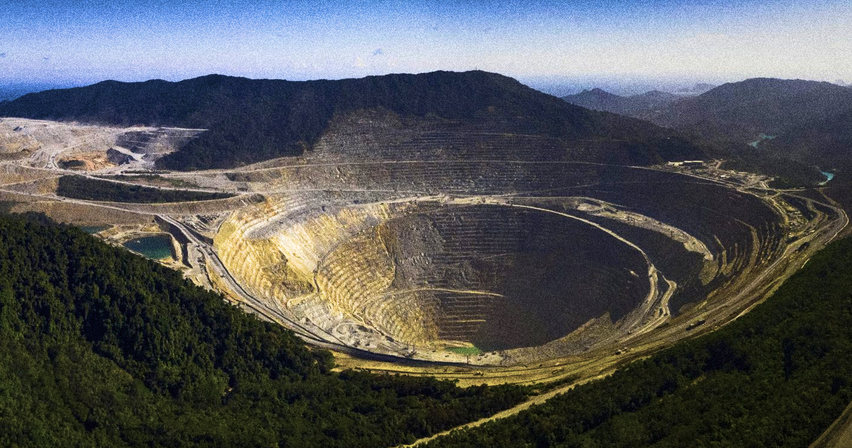
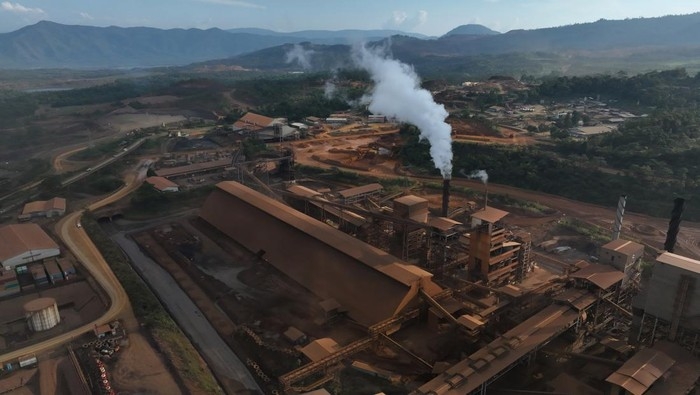
PT Freeport Indonesia (PTFI) recorded copper production of 436 million pounds during the third quarter of 2023. This figure represents a 14.43% increase compared to the same period the previous year when it stood at 381 million pounds.Kathleen Quirk, President of Freeport-McMoRan, stated that copper and gold production in the third quarter of 2023 showed significant growth compared to the same period the previous year."The production for copper this quarter is more than 400 million pounds, and gold is more than 500,000 ounces, indicating the vast scale of these operations," said Kathleen during the FCX quarterly conference call for the third quarter of 2023, as quoted on Sunday (22/10/2023).Specifically, gold production from the Grasberg Mine reached 528,000 ounces, an 18.65% increase from the previous year's position of 445,000 ounces.As for the consolidated sales of copper concentrate from PTFI during the third quarter of 2023, it reached 430 million pounds, higher than the record for the same period the previous year at 381 pounds. The average realized selling price was at the level of USD 3.77 per pound during the last three months.On the other hand, consolidated gold sales from PTFI experienced a decline to 395,000 ounces, compared to the previous level of 476,000 ounces in the third quarter of 2022. The decrease in gold sales in the form of anode sludge was due to export permit adjustments, with around 75,000 anode sludge still currently suspended for export.Assuming an average gold price of USD 1,900 per ounce in the fourth quarter of 2023 and considering the current sales volume and estimated costs, the net cash cost per unit for PTFI is estimated to reach USD 0.15 per pound of copper until the end of 2023.Through three mining blocks currently operating in the Grasberg area, PTFI's annual production capacity reaches approximately 1.6 billion pounds of copper and 1.6 million ounces of gold."Our consolidated net cash cost is on average USD 1.37 per pound in the third quarter of 2023, similar to last year's third quarter. The increase from our guidance of USD 1.61 per pound mostly reflects the impact of export duties in Indonesia," said Quirk.Meanwhile, Quirk mentioned that the progress of the construction of the Manyar PTFI copper smelter in Gresik, East Java, has reached about 84%.According to her, the execution of the smelter project with an investment value of USD 3 billion is progressing well, and her team is very focused on completing the project efficiently.The construction of the Freeport Indonesia smelter is expected to be completed and begin commissioning in the second quarter of 2024, with a ramp-up scheduled until the end of 2024."The smelter construction has reached 84%, and we will begin production ramp-up in 2024," she said.Image source: Bloomberg-Dadang TriSource: www.ekonomi.bisnis.com/Produksi Tembaga Freeport Naik 1443 Triwulan III 2023

PTBA confidently achieves its coal production target through digitalization
26 Oct 2023, 12:00 PM 5666

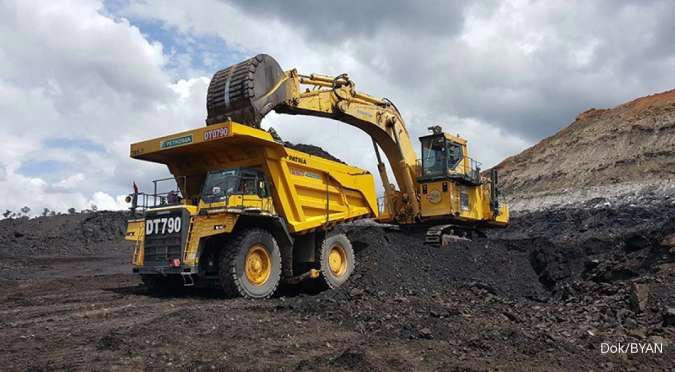
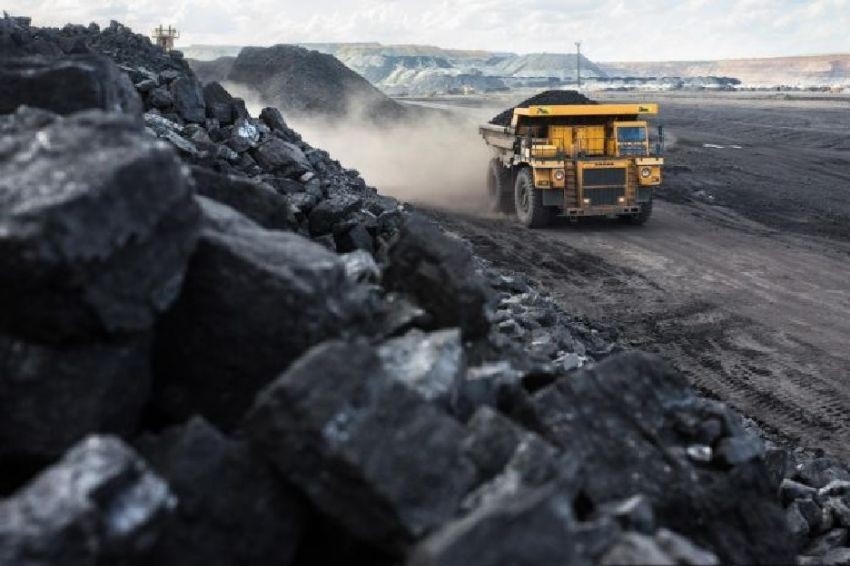
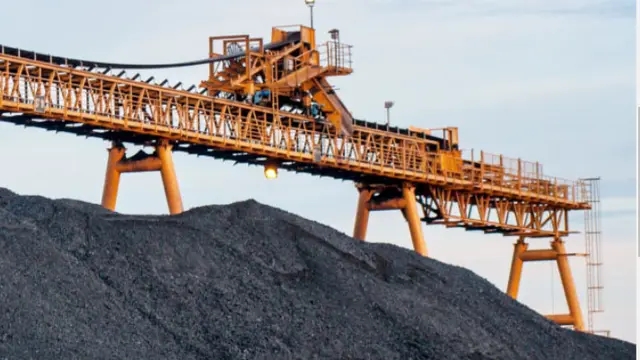
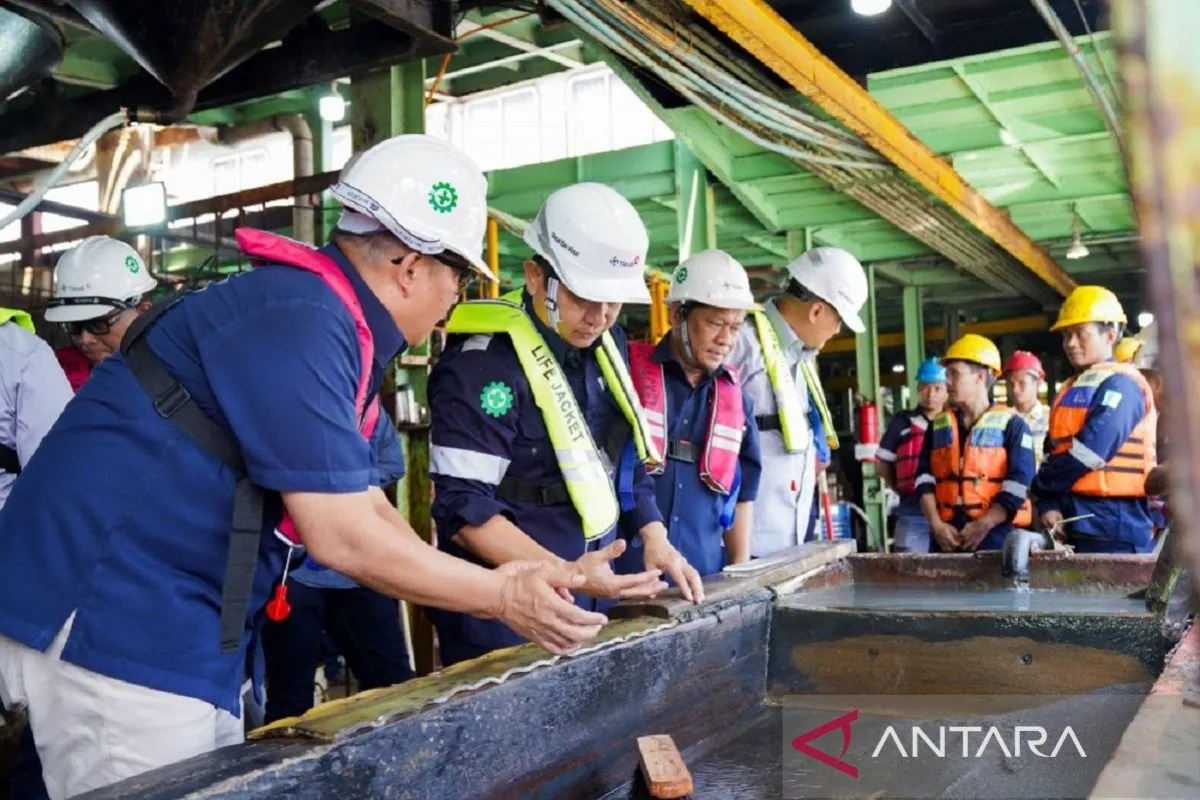
PT Bukit Asam Tbk (PTBA) is optimistic about its coal production target reaching 41.0 million tons in 2023, marking an 11% increase from the 2022 realization of 37.1 million tons.Niko Chandra, Corporate Secretary of Bukit Asam, stated that PTBA's total coal production in the first half of 2023 reached 18.8 million tons, a growth of 18% compared to the same period in 2022, which was 15.9 million tons."We are optimistic about achieving the production target by the end of this year," Niko said when contacted by Kontan.co.id on Monday (23/10).Niko explained that digital transformation is part of PTBA's strategy to implement Good Mining Practice, enhancing efficiency and business sustainability. Decision-making becomes faster, more precise, and accurate.Since 2020, PTBA has had the CISEA (Corporate Information System and Enterprise Application) application to monitor mining activities in real-time through mobile phones.The CISEA application integrates several systems, including Automation & SCADA System Integration, Bukit Asam Mine Dispatch Optimization System, Automatic Train Loading Station, Slope Stability Radar (SSR), Digital Telemetry, and Integrated Water Monitoring System (SPARING).With the integration of SCADA in the CISEA platform, distance is not an issue for performing software maintenance, troubleshooting, and analyzing control systems at PTBA. Data analysis is easier and more accurate because all operational data is stored automatically and in real-time.Niko further conveyed that through the Bukit Asam Mine Dispatch Optimization System, mining productivity and efficiency can be enhanced. Production data, real-time performance of units and operators, loss time, fuel consumption, monitoring unit positions (loader, hauler, ancillaries), unit status, real-time estimates of mine road conditions, operational safety, water monitoring, and rain monitoring are all available on mobile phones.Moreover, Niko mentioned that with the Automatic Train Loading Station, the loading and weighing of coal into train cars are done automatically and can be monitored with a mobile phone. The process of loading coal into train cars is faster, and the capacity of coal output from the mining site to the port is increased.Niko added that there is also Digital Telemetry providing real-time rainfall data through CISEA. Additionally, SPARING issues early warnings if there is a deviation in water quality that does not meet the standard.Image source: ANTARA FOTO/Iggoy el FitraSource: www.industri.kontan.co.id/Manfaatkan Digitalisasi Bukit Asam PTBA Yakin Capai Target Produksi Batubara

Nickel downstream exports achieved USD 14.53 billion in 2022
26 Oct 2023, 09:00 AM 6689

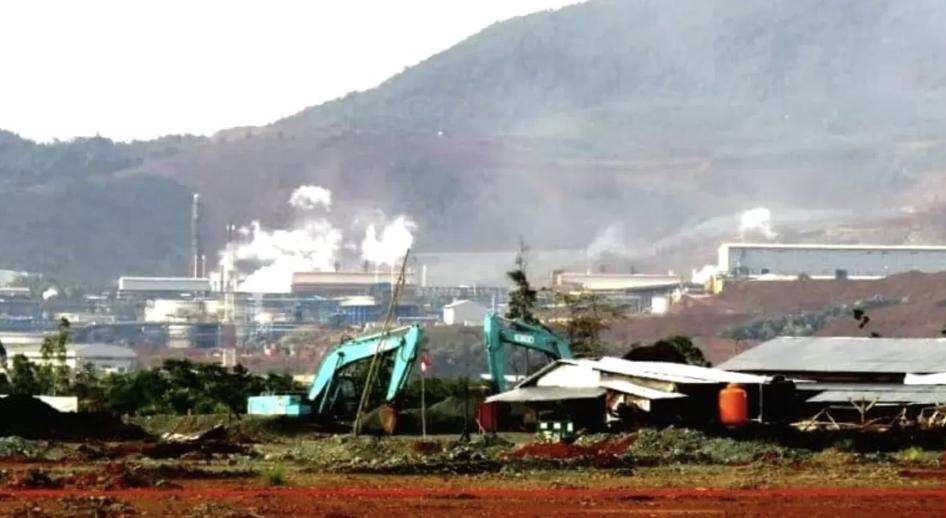
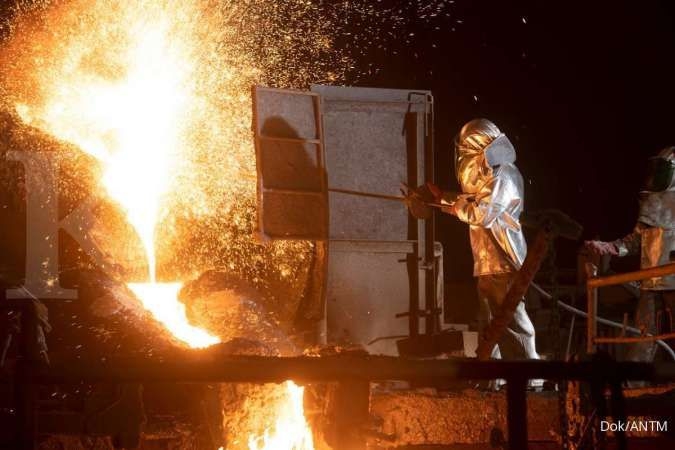
The government's policy in the form of a ban on nickel ore exports in 2020 had a positive impact on the implementation of the downstreaming program that has been planned for the past few years.The Coordinating Minister for Economic Affairs, Airlangga Hartarto, said that this policy was able to increase exports of nickel downstream commodities to reach USD 14.53 billion by 2022."With this achievement, the total trade balance of upstream, intermediate, and downstream nickel commodities in 2022 also experienced a surplus of USD 13.76 billion," said Airlangga at the Indonesia Mining Summit (IMS) 2023 in Nusa Dua Bali on Tuesday (10/10/2023), virtually.Airlangga mentioned that the nickel downstreaming policy also succeeded in nurturing the stainless steel industry ecosystem, with the potential added value from nickel ore to ferronickel and stainless steel billets increasing by 14 to 19 times.In this regard, the government will continue to encourage the use of technology for the downstreaming of mineral and metal-based commodities such as bauxite, tin, copper, and nickel. From this program, the investment value in Indonesia's downstreaming roadmap is predicted to reach USD 545.3 billion.Entering late 2023, Airlangga stated that Indonesia's national economic fundamentals continue to strengthen, with Gross Domestic Product (GDP) for the second quarter of 2023 at 5.17 percent.One of the pillars of this growth is the processing industry sector, which was recorded to be able to grow 4.88 percent year on year with a contribution of 18.25 percent to GDP.For information, in 2022, the realization of non-tax state revenue in the non-oil and gas natural resources (SDA) sector reached IDR 120.1 trillion or grew 127.2 percent compared to the previous year which was only IDR 52.9 trillion.Image source: AntamSource: www.indopos.co.id/Ekspor Hilirisasi Nikel Meningkat Capaian 2022 Tembus USD 1453 Miliar

AsiaMet Resources advances multiple workstreams for BKM Copper Project in Indonesia
26 Oct 2023, 08:00 AM 5422

Asiamet Resources Ltd (AIM:ARS, OTC:KMGLF) CEO Darryn McClelland talked to Proactive about the various ongoing workstreams for the development of its wholly-owned, feasibility-stage, BKM copper project in Central Kalimantan, Indonesia.The financing workstreams with senior bank debt and prepayment finance through copper cathode offtake are progressing on schedule and to expectations.McClelland provided an update on the comprehensive review by independent technical engineering (ITE) experts SRK Consulting. "It's been an extensive review. So we are happy with the outcomes," McClelland confirmed. This review feeds into the debt financing process, and the report will be sent to the potential lead bank for further assessment.He also touched on the company's work on financial modelling and valuation metrics, assisted by corporate advisor Grant Samuel. "Grant Samuel has a pretty wide remit for us. This is one part of their work, but they're also helping us with the valuation of other aspects such as the offtake agreement and potential mergers and acquisitions," he said.Offtake and prepayment financingOn the subject of offtake and prepayment financing, AsiaMet has received its first indicative term sheet from “one of the world leaders in metals trading”. McClelland expressed satisfaction, stating, "It's another step of validation of the project." Other interested parties are also undergoing due diligence.Additionally, McClelland revealed ongoing talks with potential project execution partners, particularly in Indonesia and with Chinese engineering, procurement, and construction contractors. The focus, he says, is on "looking at what sort of model might fit best for the project."AsiaMet is also working to secure necessary permits and to improve site access, with McClelland indicating that they have "been doing some detailed work around that."“Significant inbound interest”McClelland disclosed that the company has attracted interest from various companies for direct investments and collaborations. He said, "There's been some significant inbound interest in the resources - different groups have different thoughts on how they may want to look at the projects or the company, we're advancing those prospects and certain levels of due diligence is being done."Image source: www.proactiveinvestors.co.ukSource: www.proactiveinvestors.co.uk/Asiamet Resources Advances Multiple Workstreams For BKM Copper Project In Indonesia

Amman Minerals storms ranking of the world's 50 most valuable mining stocks
25 Oct 2023, 12:00 PM 7420

At the end of Q1 2022, the MINING.COM TOP 50 ranking of the world’s biggest miners hit an all-time record of a collective USD 1.75 trillion as copper spent time above USD 10,000 a tonne, real nickel trades were being made above USD 40,000, lithium shipped for over USD 60,000 and everything from gold and platinum to uranium and tin were rallying hard. Uranium prices have doubled since then to above USD 60 a pound, tin is also trading higher, although well below its March 2022 peak while gold’s recent safe haven rally means the precious metal is also trading higher compared to March 2021.Iron ore, where the top diversified mining companies dig for most of their profits, has also held up remarkably well, trading at USD 120 a tonne this week, little changed from end-June.  Base and battery metals however have entered a deep slump since those heady days. Copper, zinc and aluminium are firmly in bear market territory down by a fifth or more, nickel and palladium investors are nursing 40%+ losses, cobalt is nearing record lows and lithium prices are hovering above USD 20,000.After defying weakness on metals markets due to high expectations of strong future demand, particularly for copper, lithium and nickel, mining stock valuations have now succumbed. At the end Q3 2023, mining valuations for the industry’s top tier have slumped a total of USD 516 billion since the all-time highs. Declines so far this year total USD 145 billion for a combined market value of USD 1.38 trillion – back to levels seen at the end of September 2021.  Just how bad sentiment is across the board is evident from the best performer list for Q3, which includes for the first time three counters which lost ground over the period. Archipelago ascentThe first Indonesian company to make it into MINING.COM’s ranking of world’s 50 most valuable mining companies, Amman Minerals Internasional, has surged 213% in US dollar terms since its July debut in Jakarta to reach a market capitalisation just shy of 450 trillion rupiah, or more than USD 28 billion.Amman Minerals is the owner and operator of the giant Batu Hijau copper and gold mine in production since the turn of the millennium and is developing the adjacent Elang project on the island of Sumbawa. Elang is one of the world’s largest undeveloped copper and gold porphyry deposits and is currently in the feasibility stage. Elang boasts 4.7 million tonnes of proven and probable copper reserves and over 15 million ounces of gold.Indonesian copper-gold company storms ranking of world’s 50 most valuable mining stocksIndonesia has become a red-hot IPO market this year and Amman was the largest of the year so far raising more than USD 700m in its IPO, and now sits at number 11 on the ranking. Bloomberg reports Amman Minerals’ ascent has minted at least six new billionaires, including chairman Agus Projosasmito, whose stake in the company is now worth USD 2.7 billion. The miner’s spectacular market performance has also added USD 4 billion to the net worth of Anthoni Salim, who helms one of Indonesia’s largest conglomerates, taking the tycoon’s paper billions to within shouting distance of double digits.Indonesia’s other major mining IPO, Harita Nickel, is on a different trajectory altogether. Listed on the Indonesian Stock Exchange in April raising USD 672m, the company has had a tough go of it and the stock has shed more than 60% since then as nickel prices continue to decline.Lithium lossesThe strength of the lithium sector outside China had been remarkable given the precipitous decline in prices for the battery metal since hitting all time highs above USD 80,000 a tonne in November last year. But during Q3 the slump in prices of the battery raw material caught up with the six stocks represented in the Top 50, for a combined loss of over USD 30 billion in market cap over the three month period to just over USD 70 billion. Indonesian copper-gold company storms ranking of world’s 50 most valuable mining stocksMeasured from their 52-week highs the correction in the sector has been brutal – Perth-based Pilbara Mineral has bled 31% in market cap, making it the best performer. Mineral Resources has given up 37% while the declines for Albemarle, SQM, Ganfeng and Tianqi have been over 50%.  Pilbara Minerals, which unlike its peers is clinging onto year-to-date gains,  joined the Top 50 last quarter and brought the number of companies based in the Western Australia capital to five, surpassing the tally of Vancouver, British Columbia as the top home base in the ranking.The chances of another Perth-based lithium miner, IGO, of entering the Top 50 has dimmed. With a market cap of USD 5.4 billion, the company is down to the mid-60s in the ranking. The merger of US-based Livent and Australia-Argentina lithium miner Allkem, expected to close before 2023 is out, may also not be enough for the combined firm to enter the Top 50. Together the two companies are now worth USD 7.4 billion, which would edge out AngloGold Ashanti for the last spot, but the fortunes of lithium and gold going into 2024 are diverging widely.  The blocking tactics of Gina Rhinehart’s Hancock Prospecting against the takeover of Liontown Resources by Albemarle turned out to be successful with the US lithium giant deciding to walk away from the deal this week.Liontown’s 127% surge this year afforded the Perth-based company a market value of USD 4 billion before the collapse of the takeover which halted trading in the stock. Liontown on Thursday said it has secured the necessary funding to bring its Kathleen Valley project into production.Enriched uraniumIn September, uranium scaled USD 60 per pound for the first time since 2011. The breakthrough for the nuclear fuel comes after a decade in the doldrums following the Fukushima disaster in Japan.The World Nuclear Association predicts world reactor requirements for uranium to surge to almost 130,000 tonnes (~285 million pounds) in 2040. That’s up from an estimate of 65,650 tonnes in 2023. A significant portion of the WNA’s upward growth adjustments can be attributed to the accelerated adoption of Small Modular Reactors (SMRs) as part of decarbonisation efforts for a range of industries from shipping to data centres with powering remote mine sites near the top of the list for SMR potential.Canada’s Cameco makes the best performer list over the three months again in Q3 after spending much of the post-Fukushima period in the wilderness. The Saskatoon-based company enters the top 30 for the first time after jumping 19 places so far this year.    The value of shares in Kazatomprom, the world number one uranium producer, topped USD 10 billion at the end of Q3 placing it at position 36. Until this year the state-owned Kazakh company was outside earshot of the Top 50 since its dual-listing in London and Astana in 2018.  Diversified dropBHP’s market position has also been supported by uranium prices as the Melbourne-based company boosts output at its Olympic Dam operations. The world’s top mining company’s market value has declined by less than 8% year to date for a USD 142 valuation, outperforming other diversified heavyweights Rio Tinto, down 17%, Glencore (–21%), Vale (–25%) and Anglo American (–38%). London-listed Anglo American has had a rough year in part due to its exposure to platinum group metals and control of Anglo American Platinum, and is now valued at USD 32 billion after peaking at USD 70 billion in March 2021.  Investors in Anglo, with a history going back more than a hundred years on the South African gold and diamond fields, have had a particularly wild ride over the last few years. In January 2016, Anglo’s market cap fell below USD 5 billion after it came close to suffocating under a pile of debt.  The dramatic slump in palladium prices (down 38% this year) and platinum (–16%) have also seen AngloPlat drop to its lowest position ever at a valuation of USD 10 billion, down from nearly USD 40 billion end-March 2021. Former PGM high flyers Impala Platinum and Sibanye Stillwater, both valued around the USD 4 billion mark today, have lost sight of the Top 50 altogether. Indonesian copper-gold company storms ranking of world’s 50 most valuable mining stocksImage source: Amman MineralsSource: www.mining.com/Indonesian Copper Gold Company Storms Ranking Of Worlds 50 Most Valuable Mining Stocks

BYAN Deposit IDR 11.86 Trillion to the State Treasury
25 Oct 2023, 09:00 AM 5289

Throughout 2023, the soaring prices of commodities due to the energy crisis have driven up the prices of Indonesia's main export commodity, coal. The country is certainly reaping profits from the surge in coal prices.One such beneficiary is the coal company owned by Low Tuck Kwong, PT Bayan Resources Tbk (BYAN). BYAN contributes to the national treasury through payments of coal royalties and taxes.According to the financial report of of PT Bayan Resources Tbk (BYAN) for the second quarter of 2023, based on cash flow from the company's operating activities, the total deposits paid to the government reached USD 789.7 million or equivalent to IDR 11.86 trillion (exchange rate on June 31, 2023 IDR 15,026 per US dollar).The two main sources of deposits come from mining royalty payments and tax payments. If broken down further, BYAN's royalty payments until the second quarter of 2023 reached USD 238.2 million or the equivalent of IDR 3.57 trillion.Meanwhile, the income tax obtained by BYAN is more substantial at USD 551.6 million, equivalent to IDR 8.28 trillion.Compared to the same period last year, BYAN's deposit value nearly doubled, rising by 42.7%. In 2022, BYAN's royalty payments and the two components of corporate tax and income tax were 'only' USD 452 million or the equivalent of IDR 6.79 trillion.Narrow MarginOn the other side, Bayan Resources reported a decrease in net profit in the first half of 2023. Their net gain reached USD 723.85 million or approximately IDR 11.5 trillion (assuming an exchange rate of IDR 15,900 per USD).The net profit shrank 25.4% compared to the first semester of 2022 worth USD 970.75 million or equivalent to IDR 15.4 trillion. BYAN's reduced profits coincided with the implementation of Government Regulation (PP) Number 26 of 2022 concerning Types and Rates of Non-Tax State Revenues applicable to the Ministry of Energy and Mineral Resources.For information, the increase in PNBP from coal royalties has increased with the enactment of Government Regulation (PP) Number 26 of 2022 which took effect in September 2022. The PP regulates the new price of coal royalties up to 13.5% of the original price of only 7% of the price for the reference coal price/HBA equal to or greater than USD 90 per ton.Image source: Reuters/Willy KurniawanSource: www.trenasia.com/Emiten Milik Raja Batu Bara Low Tuck Kwong Byan Setor Rp 11 86 Triliun Ke Kas Negara

Ministry of Energy and Mineral Resources designates 47 mining commodities as critical minerals
25 Oct 2023, 08:00 AM 10515

The Indonesian government, through the Ministry of Energy and Mineral Resources (ESDM), has classified 47 types of mining commodities as critical minerals. This decision is outlined in Ministerial Decree No.296.K/MB.01/MEM.B/2023 concerning the Determination of Commodity Types Classified as Critical Minerals. Minister of ESDM Arifin Tasrif issued this decree on September 14, 2023.So, what is the reasoning behind the government's classification of these 47 critical mineral commodities?In response to this question, Answering that question, Chairman of Association of Indonesia Mining Professionals (PERHAPI), Rizal Kasli said that one of the reasons behind the designation of 47 types of raw mineral commodities is to support the development of domestic strategic industries."These mineral resources are indeed needed to support domestic strategic industries. Furthermore, they can also contribute to the growth of industrialization in Indonesia," he stated in an interview with CNBC Indonesia on the Mining Zone program, quoted on Friday (October 20, 2023).Rizal mentioned another reason for classifying these 47 critical mineral commodities domestically is to enhance the defense and security sector within the country. This is because the 47 designated critical minerals are considered highly strategic for industrial growth."The urgency of this is indeed necessary because considering these critical minerals, firstly, they are very strategic for industries, especially domestic industries and those related to defense and security," he added.Additionally, Rizal noted that the designation of these 47 critical mineral types indicates a limited domestic supply."Although we have considerable resources and reserves for some groups of these critical minerals, this also needs to be considered for the future," he emphasized.In addition, he assessed that if the types of critical mineral commodities are not determined from now on, there is a possibility that Indonesia could be in short supply, because these minerals are allowed to be traded abroad."If we release them, it means we will not process them domestically, leading to a potential supply shortage in the future," he concluded.As per the Ministerial Decree, this decision was made by considering "that in order to ensure the supply of mineral raw materials for strategic industries in the country and improve the national defense and security economy, it is necessary to establish criteria and classification of minerals classified as critical minerals."The Ministerial Decree from the Ministry of ESDM comprises six key points. In the second point, it is stated that "Critical Minerals, as referred to, are minerals that are of crucial importance for the national economy and national defense and security, with the potential for supply disruption and no suitable substitutes."Here is the list of 47 mining commodities classified as critical minerals:1. Aluminum, derived from bauxite mining commodities.2. Antimony, derived from antimony mining commodities.3. Barium, derived from barite mining commodities.4. Beryllium, derived from beryllium mining commodities.5. Iron, derived from iron ore and iron sand mining commodities.6. Bismuth, derived from bismuth mining commodities.7. Boron, derived from boron mining commodities.8. Cadmium, derived from cadmium mining commodities.9. Feldspar, derived from feldspar mining commodities.10. Fluorspar, derived from fluorspar mining commodities.11. Phosphorus, derived from phosphate mining commodities.12. Galena, derived from galena mining commodities.13. Gallium, derived from gallium mining commodities.14. Germanium, derived from germanium mining commodities.15. Graphite, derived from graphite mining commodities.16. Hafnium, derived from hafnium mining commodities.17. Indium, derived from indium mining commodities.18. Potassium, derived from potassium mining commodities.19. Calcium, derived from calcium mining commodities.20. Cobalt, derived from cobalt mining commodities.21. Chromium, derived from chromite mining commodities.22. Lithium, derived from lithium mining commodities.23. Rare Earth Metals, derived from rare earth metal mining commodities.24. Magnesium, derived from magnesium mining commodities.25. Manganese, derived from manganese mining commodities.26. Mercury, derived from cinnabar mining commodities.27. Molybdenum, derived from molybdenum mining commodities.28. Nickel, derived from nickel mining commodities.29. Niobium, derived from niobium mining commodities.30. Palladium, derived from palladium mining commodities.31. Platinum, derived from platinum mining commodities.32. Ruthenium, derived from ruthenium mining commodities.33. Selenium, derived from selenium mining commodities.34. Zinc, derived from zinc mining commodities.35. Silica, derived from quartz sand, quartzite, and crystal quartz mining commodities.36. Sulfur, derived from sulfur mining commodities.37. Scandium, derived from scandium mining commodities.38. Strontium, derived from strontium mining commodities.39. Tantalum, derived from tantalum mining commodities.40. Tellurium, derived from tellurium mining commodities.41. Copper, derived from copper mining commodities.42. Tin, derived from tin mining commodities.43. Titanium, derived from titanium mining commodities.44. Thorium, derived from thorium mining commodities.45. Tungsten, derived from tungsten mining commodities.46. Vanadium, derived from vanadium mining commodities.47. Zirconium, derived from zircon mining commodities.Image source: CNBC Indonesia/Tri SusiloSource: www.cnbcindonesia.com/47Komoditas RI Jadi Mineral Kritis Ternyata Ini Alasannya

Archi Indonesia Spent IDR 85 Billion on Exploration
20 Oct 2023, 09:00 AM 5571

Archi Indonesia (ARCI) spent exploration funds of USD 5.69 million, equivalent to IDR 85.9 billion. These funds will be spent on exploration activities for the period January-September 2023. Exploration through Meares Soputan Mining (MSM), and Tambang Tondano Nusajaya (TTN).The exploration area is the Toka Tindung Gold Mine, a pure-play gold producer mine located approximately 35 km northeast of the capital city of Manado, North Sulawesi (Sulut). The Toka Tindung Gold Mine consists of two long-term Contracts of Work (CoW). Covers an area of 39,817 hectares (ha) stretching across North Minahasa Regency and Bitung City, North Sulawesi. A number of Work Contracts valid until 2041 are held by MSM and TTN. In accordance with changes to the Mining Law, MSM and TTN received a guarantee of extending their Contract of Work two more times in the form of a Special Mining Business Permit (IUPK). Each extension is for a maximum period of 10 years.The exploration activities carried out by the company, through MSM and TTN, for the January-September 2023 period focus on mapping activities, soil sampling programs, and IP geophysics in the Greenfield area, and semi-detailed to detailed mapping in the Brownfield area of the West Corridor project. Semi-detailed mapping and CSAMT geophysics were also carried out in the Brownfield area of the Eastern Corridor Project. Exploration drilling activities, and gold resource definition drilling on the West Corridor project. Then, exploration drilling on the Eastern Corridor project. Total drilling activities for the January-September 2023 period reached 157 core drill points with a total depth of 32,212.0 meters.Image source: EmitenNews.comSource: www.emitennews.com/Sedot Anggaran Rp85 Miliar Ini Perkembangan Eksplorasi Archi Indonesia ARCI

Government prioritized a number of Coal and Mineral Policies
20 Oct 2023, 08:00 AM 4821

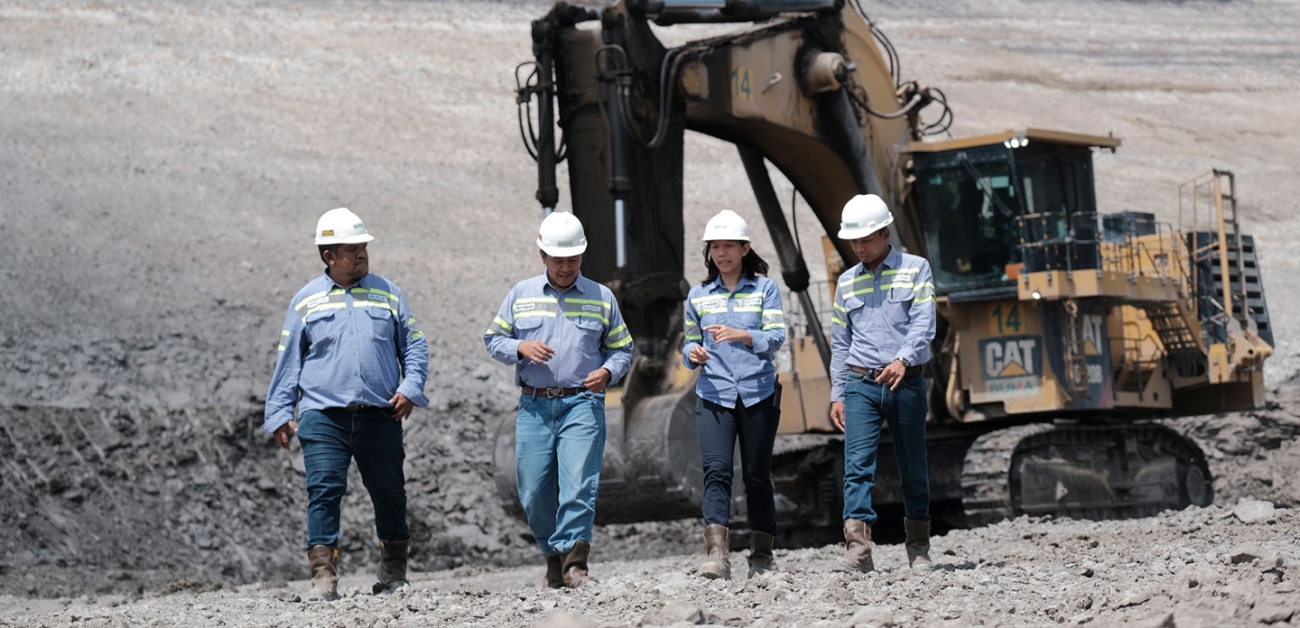
Minister of Energy and Mineral Resources Arifin Tasrif said that Indonesia has enormous mineral and coal potential and plays an important role in economic growth, as well as national industrial independence and resilience.Arifin said, the current government is prioritizing several mineral and coal policies, including increasing exploration of mineral and coal reserve resources, including the potential for rare earth metals and critical minerals. Apart from that, reclamation and post-mining, business certainty and ease of investment, increasing the Domestic Component Level, and increasing added value by paying attention to environmental aspects."Increasing the added value of minerals has an important role in supporting the energy transition in Indonesia, including being used as raw material for solar, wind and nuclear plants; transmission and distribution cables; as well as batteries for electric vehicles and EBT power plants," added Arifin representing Indonesian President Joko Widodo at the Indonesia Mining Summit in Bali, Tuesday (10/10).Arifin also conveyed the downstream strategy that is being pushed by the Government. This includes efforts to accelerate supply chain integration between mines and smelters."Then there is the integration of industries that use processed mineral materials and the development of advanced industries, and applications from the results of processing or refining minerals. Some of the main commodities that are priorities for development include Nickel, Aluminum, Copper, Tin, Iron and Gold-Silver," continued Arifin .On that occasion, Arifin also said that mining would also be required to produce low or no emission products. Meanwhile, we still depend on fossils, especially coal. "We have to think about how we can gradually shift from heavy emissions to low emissions until finally zero emissions," he said.Then, in mineral and coal mining activities, said Arifin, it is necessary to pay attention to Environmental, Social and Governance (ESG) principles. Where environmental principles are implemented through environmental management and monitoring; post-mining reclamation; transformation of ex-mining land into other energy sources (PLTS, bioenergy) and encouraging the use of renewable energy in mining production activities."Furthermore, social principles are implemented through the Community Development and Empowerment program, prioritizing local mining service companies, local contractors and local workers. Governance principles are implemented through the regulation of IUP holders, share ownership and organizational structure," said Arifin.Apart from that, the Government also continues to improve mineral and coal mining business activities which are implemented through national mining governance, alignment with national interests, legal certainty and ease of investment, environmental management, and law enforcement."With the large potential of minerals and coal, and the availability of wide open market opportunities, as well as certainty in policies and regulations, the Government encourages business actors to invest in downstream minerals and coal," said Arifin.Meanwhile, General Chair of the Indonesia Mining Association (IMA) Rachmat Makkasau said that currently 27 new smelters are operating. In the 2024-2025 period, the mining smelter will operate optimally."The government's program in the mining downstream sector has been going well with the smelters being built. Our task, the government and industry, in the future is to see how the raw materials and reserves prepared for industrialization can be managed properly," said Rachmat.Image source: EmitenNews.comSource: www.emitennews.com/Sejumlah Kebijakan Bidang Minerba Ini Jadi Prioritas Pemerintah

Advertisement


GET YOUR PASS