AI Drives Indonesia's Mineral Downstreaming Toward Sustainability & Global Competitiveness
02 Jan 2025, 09:23 AM 4364

Artificial intelligence (AI) technology plays a key role in driving the success of Indonesia’s mineral downstreaming policies. Through the integration of AI and big data, Indonesia has developed an innovative geospatial system that optimizes natural resource management while strengthening its position in the global supply chain.Research conducted by Binus University, titled "Analysis of Big Data in Downstreaming Policies: Indonesia's Strategy and Diplomacy in the Face of Global Dynamics," highlights the benefits of AI in supporting economic diplomacy and downstreaming strategies.One of the Binus University research team members, Dr. Alexander A.S. Gunawan, explained that the use of modern technologies like the Peta Hilirisasi platform (petahilirisasi.id) offers deep insights into strategic commodities such as nickel, bauxite, cobalt, and quartz sand.“AI integration allows us to better understand the distribution patterns and socio-economic impacts of mining activities in more detail. This technology not only supports sustainability but also enhances the efficiency of resource management processes,” said Alexander.The Peta Hilirisasi platform, an AI-based geodashboard, assists the government and industry players in identifying mineral potential, mapping resource distribution, and predicting market trends. With data processed over two decades, covering production records, trade (exports-imports), and geospatial information since the early 2000s, the platform provides evidence-based insights that expedite decision-making in downstreaming.In addition to displaying interactive maps and charts, Peta Hilirisasi also features machine-learning-based market trend modeling that can project the potential added value of a commodity in the global market.Indonesia's downstream diplomacy also greatly benefits from AI integration, especially through the in-depth analysis provided by Peta Hilirisasi. This technology helps the government strengthen its arguments in international negotiations, as geospatial data makes it easier for Indonesia to demonstrate its commitment to domestic processing and sustainability—especially amidst challenges such as the European Union’s WTO lawsuit over the nickel export ban.For instance, when presenting the potential reserves of nickel and bauxite at international forums, Indonesia can provide verified distribution maps and supply forecasts. This approach strengthens the government’s negotiation position when setting export-import policies."According to the Binus study, this data-driven diplomatic approach has attracted the attention of other countries, including the Philippines and South Africa, which are now adopting similar steps. Indonesia is setting an example of how technology can bolster economic strategies and national policies in the face of global competition," said Alexander, who is also the Head of the Data Science Program at Binus University.Alexander also noted that the benefits of AI in business decision-making have been widely discussed in international journals. One such example is the research "Artificial Intelligence for the Real World" by Davenport and Ronanki, which emphasizes that AI provides faster and more accurate insights, enabling organizations to leverage data effectively and improve operational efficiency.Another relevant publication is McKinsey's "The State of AI in Early 2024," which projects that over 65% of organizations across various sectors will begin adopting AI to support strategic decision-making. While this is a global trend, several studies have highlighted similar patterns in Indonesia, particularly in the financial and manufacturing sectors. However, despite the widespread discussion about AI’s role in decision-making, research specifically focusing on the downstreaming of raw materials, diplomacy, and the related legal framework remains limited.Despite its clear advantages, AI-based downstreaming also faces challenges. The processing of minerals like nickel requires environmentally friendly technologies to minimize harmful waste. Increased mining exploitation needs to be balanced with strict regulations and sustainable technologies.“By combining AI with strong regulations, we can mitigate environmental risks while ensuring that mineral downstreaming supports inclusive national economic development,” added Alexander.Through a multidisciplinary approach that integrates technology, law, and international business, Indonesia has created a downstreaming policy that adapts to global dynamics. The Binus study states that this success opens up opportunities for Indonesia not only to become a global manufacturing hub but also a leader in technology-driven resource management."With AI as a key driver, Indonesia’s mineral downstreaming now has a stronger foundation to face global challenges, attract foreign investment, and create new jobs. However, the sustainability of this policy still depends on the synergy between technology, stakeholder collaboration, and adherence to environmental regulations," concluded Alexander.

Gresik Proves Indonesia’s Capability in Processing Copper into High-Value Products
02 Jan 2025, 08:26 AM 3945

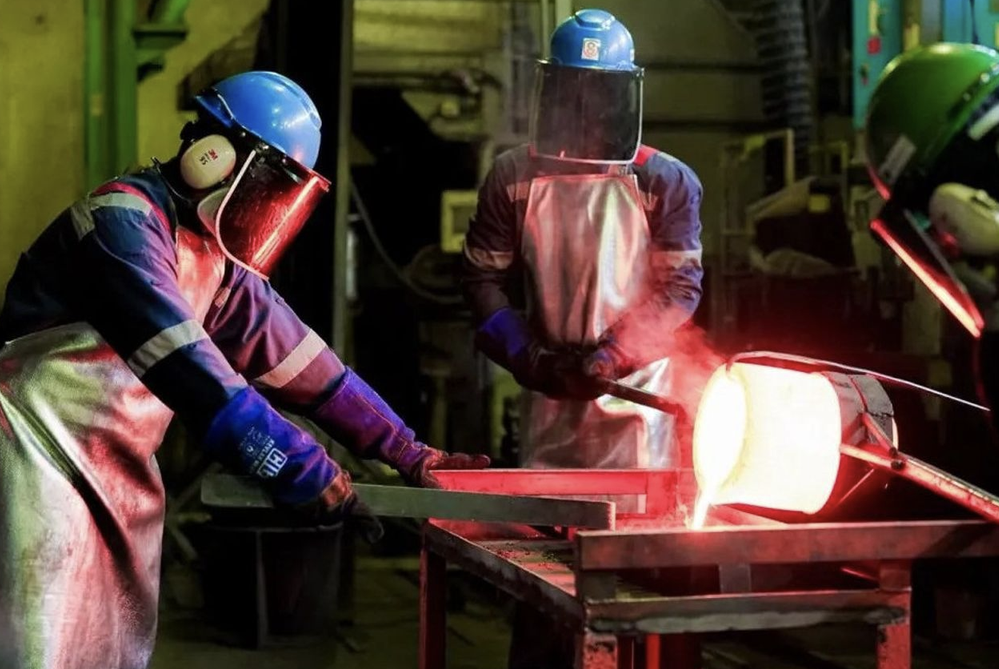
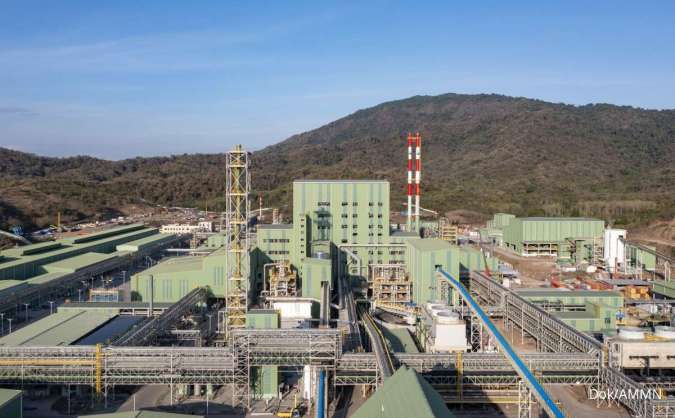
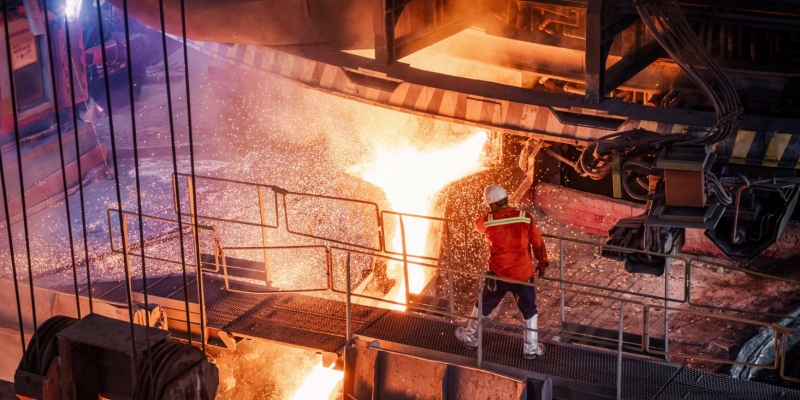
In 2025, Indonesia will further solidify its position as a key player in the global mineral processing industry, thanks to the world’s largest copper smelter with a single-line facility.Quoted from TIMENEWS.CO.ID via YouTube joziya on Thursday, January 2, 2025, the smelter plant located in Gresik, East Java, has now become one of the nation’s proud achievements. This smelter is not just an industrial facility, but also a symbol of Indonesia’s self-reliance in processing domestic mineral resources.This ambitious project began in October 2021 and has now reached a significant milestone with the commencement of the first copper cathode production on September 23, 2024.The presence of this smelter was inaugurated by the 7th President of the Republic of Indonesia, Joko Widodo, marking Indonesia's commitment to strengthening the downstream industrial sector of its mineral resources.This smelter is capable of refining up to 1.7 million tons of copper concentrate into 600,000 tons of copper cathodes annually, making it one of the largest and most efficient in the world.The choice of Gresik as the location for the smelter was not a random decision. Gresik, located in East Java, is a hub for large industries and has the infrastructure to support smooth operations.In addition, Gresik is home to major companies such as Petrokimia Gresik and Semen Indonesia, which require by-products from the copper smelting process as raw materials for their industries.The copper by-products generated by this smelter are used in the production of mobile phones, electronic devices, and automotive products.Thus, the presence of this smelter plays a role not only in enhancing Indonesia's competitiveness in the global market but also in supporting the needs of domestic industries.This smelter is capable of refining up to 1.7 million tons of copper concentrate into 600,000 tons of copper cathodes annually, making it one of the largest and most efficient in the world.The decision to locate the smelter in Gresik was a strategic one. Situated in East Java, Gresik is a hub for major industries and boasts the infrastructure necessary to ensure smooth operations.With advanced technology, this copper smelter is capable of producing high-quality copper cathodes needed by global industries, including for the production of cables, batteries, and electronics.The presence of this giant copper smelter brings many benefits to Indonesia's economy.In addition to increasing the added value of mineral resources, this smelter also accelerates domestic industrialization, reduces dependence on raw material exports, and creates new job opportunities.The increasingly efficient copper refining process will open new opportunities across various industrial sectors, ranging from telecommunications to heavy equipment manufacturing.However, like other heavy industries, the operation of the copper smelter also faces several challenges. The melting process, which involves extremely high temperatures, requires a high level of caution.Smelter workers must undergo specialized training and always wear personal protective equipment that meets the required standards.In addition, the company must regularly conduct inspections and maintenance on heavy equipment and other supporting facilities to ensure smooth and safe operations.The presence of the copper smelter in Gresik demonstrates that Indonesia is beginning to take serious steps in utilizing its natural resource potential.Instead of exporting raw materials, Indonesia is now striving to process them into high-value products that can enhance competitiveness and create new economic opportunities.This smelter also serves as an example for other mineral processing industries, such as nickel, tin, and gold, which can be processed in a similar way.

Gorontalo Opens Largest Gold Mine
31 Dec 2024, 02:31 PM 4559

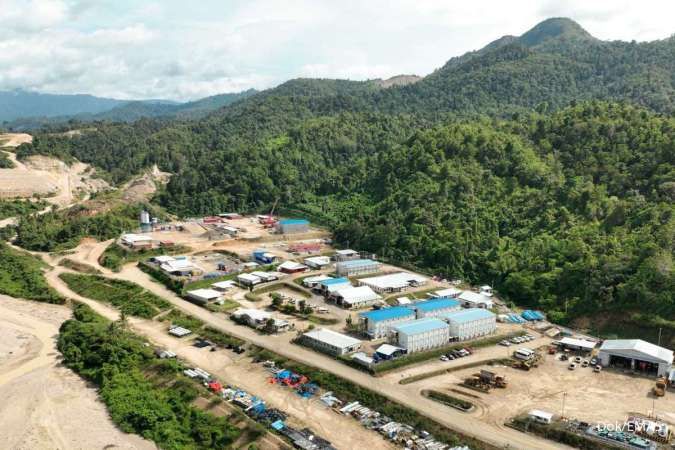
Mining in Indonesia continues to thrive, and in 2025, the largest gold mining project in the country will be built in Pahuwato, Gorontalo.The Pani gold mine, with mineral resources of 6.9 million ounces, is under the management of PT Merdeka Copper Gold Tbk (MDKA).Supporting infrastructure such as fuel storage facilities, ports, and electrical substations is also currently under construction.In 2025, PLN (State Electricity Company) will provide the main electricity supply, and the metallurgical laboratory will also begin operations in early 2025.The Chief of External Affairs of PT Merdeka Copper Gold Tbk and President Director of the Pani Gold Project, Boyke Abidin, explained that the construction of the Pani Gold Mine project will continue until the end of 2025.Once the project is completed, the first gold pour at the Gorontalo mine is planned to begin in early 2026.This mega project is expected to employ around 2,000 workers, the majority of whom will be local residents from Pani.The Gorontalo Provincial Government also welcomes the ongoing investments made by PT Pani Gold Project.Many programs have already been implemented, and the hope is that this company will truly bring prosperity and progress to Gorontalo Province.With such vast mineral resources, it is predicted that the Pani Gold Mine’s production could reach up to 300,000 ounces per year.In fact, the peak production is predicted to reach up to 500,000 ounces per year.Boyke further revealed that in January 2025, the company will begin recruitment and training processes.This is being done to ensure that the people of Pahuwato, Gorontalo are ready to work in the mining sector.In fact, many locals have already been involved in mining activities, but some have participated in illegal, unlicensed mining projects, meaning the workers are not familiar with the application of good mining practices.One of the key areas that has not been properly implemented, especially, is safety.Boyke mentioned that every month, there is always a fatal incident occurring at the illegal mines in Gorontalo.In fact, there have even been cases that resulted in fatalities. Therefore, starting in January 2025, all prospective workers participating in the recruitment process will receive training.After being recruited, workers will undergo training to develop the necessary skills for working in the gold mine.This approach will help them become more professional and reduce workplace accidents in the field.

Bumi Resources Minerals (BRMS) Confident Gold Production Will Exceed 55,000 Ounces Troy
30 Dec 2024, 09:14 AM 5399

PT Bumi Resources Minerals Tbk (BRMS) is targeting gold production to exceed 55,000 ounces of gold in 2024.Director & Chief Investor Relations Officer of Bumi Resources Minerals, Herwin W. Hidayat, stated that this optimistic target was set after the company achieved double the gold production in the first nine months of 2024 compared to the entire production in 2023. "For the first nine months of 2024 (January-September 2024), we have already recorded gold production of around 45,000 ounces. This is double the gold production for all of 2023, which was around 23,000 ounces," Herwin told Kontan on Friday (December 27, 2024)."We hope that for the full year 2024, or the January-December 2024 period, our gold production will exceed 55,000 ounces," he added.Herwin further explained that there are two key factors driving the improved performance of Bumi Resources Minerals in 2024.First, in terms of production, the increase is due to the full operation of BRMS's second gold plant, which is run by its subsidiary PT Citra Palu Minerals (CPM), which has been operating at full capacity since April 2024. "The higher gold production in 2024 is due to the fact that our second gold plant in Palu is now operating at full capacity" he said.Second, in terms of pricing, Herwin noted that the average selling price (ASP) of the company's gold has increased compared to the ASP in 2023. "The average selling price of gold in 2023 was around USD 1,930 per ounce. We are confident that the average selling price for the full year 2024 will be above USD 2,300 per ounce" he explained.According to Herwin, these two factors make the company optimistic about achieving higher revenue and net profit compared to 2023.Looking ahead to 2025, BRMS is still targeting improved performance due to slightly higher gold grades.

Indonesia's Coal Production Reaches 812.04 Million Tons by 2024
30 Dec 2024, 09:10 AM 6600

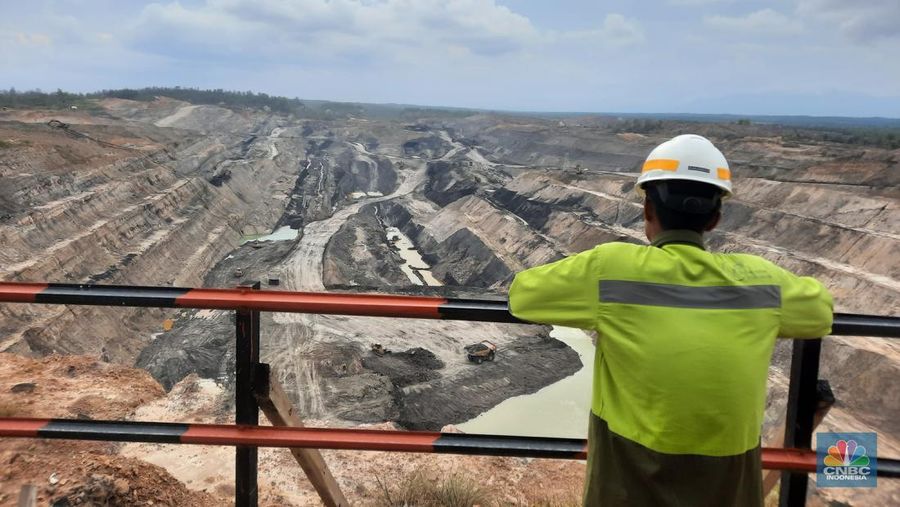
The Ministry of Energy and Mineral Resources (ESDM) has reported that as of Monday (December 30, 2024), national coal production has reached 812.04 million tons.According to data from the Ministry of ESDM's Minerba One Data Indonesia (MODI), of the total coal production, domestic consumption has absorbed 365.70 million tons. Meanwhile, the export realization is 417.57 million tons, against the target of 490 million tons for coal exports this year."Production Realization: 812.04 Million Tons. Production Percentage: 114.37% (of the 2024 production target of 710 million tons)," the MODI data from the Ministry of ESDM stated, as quoted on Monday (December 30, 2024).As is known, the Ministry of Energy and Mineral Resources (ESDM) has approved the coal production plan for 2024 through the Work Plan and Budget (RKAB) of up to 955 million tons."The final figure (for the approval of the coal RKAB) is 955 million tons. Right now, the production realization according to MODI is 675 million tons as of October," explained Surya Herjuna, Director of Coal Business Development at the Directorate General of Mineral and Coal, Ministry of ESDM, when met at the Directorate General of Mineral and Coal Office, Jakarta, Wednesday (October 30, 2024).Surya added that for 2025, the target will still be set around 900 million tons. This is because the government needs to maintain the domestic coal reserves."For the 2025 RKAB, it will still be around 900 million tons, the same as before. It has been stable at that 900 million tons level for three years. However, coal production requires efforts from us to prevent it from reaching its peak. So, we aim to maintain stability at that level" he explained.

INALUM Successfully Sets Production Record of 265,546 kT in 2024
28 Dec 2024, 09:20 AM 6056

PT Indonesia Asahan Aluminium (INALUM) has achieved an impressive and record-breaking performance in 2024. This success is the result of the company's strategic steps in boosting production and sales to capitalize on the domestic market, while also contributing to achieving aluminum self-sufficiency from domestic minerals.INALUM has reached an All-Time High Achievement in Supply Chain & Commercial Management for 2024. The company achieved an All-Time High in production, with a total output of 265,546 kT as of December 22, 2024, surpassing the previous record of 264,474 kT set in 2014.Furthermore, INALUM's aluminum sales also reached an all-time high of 263,195 MT\, breaking the previous record of 260,651 MT set in 2013.INALUM has also achieved Quadrant 1 in World-Class Smelter Cost Management from Wood Mackenzie. In terms of cost leadership, INALUM successfully reduced its cash cost by 9.5% to 10%, from USD 1,866 per ton in Q3 2023 to USD 1,688 per ton in Q3 2024.The President Director of INALUM, Ilhamsyah Mahendra, expressed gratitude for the positive impact of the company's strategic initiatives over the past few years on its performance. "We will continue to consistently implement the initiatives that have been established in order to accelerate and strengthen the company's position in the future," he said in an official statement on Sunday (December 28, 2024).Ilham further explained that INALUM's production capacity reached 275,000 tons in 2024. Through Pot Upgrading and Pot Optimization, INALUM's production capacity could reach 300,000 tons in 2025-2026. INALUM plans to expand with a second smelter with a capacity of 600,000 tons of aluminum, and a third smelter with a similar capacity, bringing the total aluminum production capacity to 1.5 million tons within the next 5 to 10 years.With this move, INALUM aims to meet the domestic aluminum market demand, which ranges from 1 million to 1.2 million tons, with an annual market growth rate of 3% to 5%.Additionally, global aluminum demand is still experiencing a supply deficit of 3 million to 5 million tons, presenting a significant opportunity for all global aluminum production, including INALUM."We will capitalize on this opportunity as much as possible. Not only to meet the domestic market demand but also to increase our penetration in the global market, allowing us to consistently deliver this strong performance in the coming years," said Ilhamsyah Mahendra.MIND ID's Corporate Secretary, Heri Yusuf, explained that this achievement is a concrete demonstration of the MIND ID Group's commitment to supporting Indonesia's aluminum self-sufficiency, aiming to drive downstreaming and industrialization within the country.As a strategic active holding, MIND ID has also integrated the businesses of PT Aneka Tambang Tbk and INALUM in the effort to downstream bauxite into alumina, which serves as the main raw material for INALUM's aluminum production."We are certainly very grateful for this achievement, and we will continue to be consistent in implementing all the strategic initiatives that have been planned to support the manufacturing sector and provide greater added value, aiming towards Indonesia's Golden 2045" he added.Heri explained that aluminum will be one of the key commodities in supporting the development of Indonesia's electric vehicle (EV) ecosystem. Its significant use as a key component in battery frames, car bodies, and rims makes it a critical material in the sector."We will consistently support the government to achieve 8% growth by implementing a series of mineral downstreaming programs, which will ultimately strengthen the strategic industries entrusted to MIND ID by the government, particularly the electric vehicle ecosystem" he said.

Petrindo Jaya (CUAN) to Produce Metallurgical Coal, Prepares IDR 2.42 Trillion in Funding
28 Dec 2024, 09:12 AM 4111

PT Petrindo Jaya Kreasi Tbk. (CUAN) has produced metallurgical coal through its subsidiary, PT Daya Bumindo Karunia (DBK). The production of this metallurgical coal is funded by a credit facility amounting to IDR 2.42 trillion. The production is taking place in the operational area in Central Kalimantan as part of CUAN's portfolio diversification efforts. Currently, CUAN's subsidiary, DBK, is integrating production facilities by building office spaces, fuel storage warehouses, employee housing, and a 149-kilometer mining road infrastructure that connects the operational area to the intermediate stockpile location."The integration of production facilities in the operational area of our subsidiary DBK is a strategic step being implemented by the company. The construction of infrastructure, such as roads, office areas, and fuel storage warehouses, will streamline DBK's production and transportation activities in the future," said Michael, CEO of Petrindo, in a written statement on Saturday (December 28, 2024).The integration and development of DBK's facilities are also being carried out by another subsidiary of Petrindo, PT Petrosea Tbk. (PTRO), a multidisciplinary mining contractor and integrated EPC company. Earlier, in June 2024, Petrosea signed an agreement with DBK for mining infrastructure development services as part of its long-term strategy, which includes business development and expansion.In addition to the mining road, Petrosea is providing other supporting infrastructure services to DBK, such as the construction of employee camps, offices, warehouses, fuel storage, and jetty facilities, as well as mining services that include overburden removal and coal production activities.All operational activities and the construction of CUAN's metallurgical coal production facilities are financed through a credit facility from PT Bank Negara Indonesia (Persero) Tbk. (BBNI), which was obtained on December 23, 2024. The maximum value of this credit facility is IDR 2.42 trillion.CUAN has also posted strong financial performance this year. As of the third quarter of 2024, CUAN's net profit surged by 162.69% year-on-year (YoY) to USD 30.4 million, up from USD 11.5 million in the previous year. CUAN's revenue reached USD 546.05 million by the end of September 2024, an extraordinary 612.76% increase compared to the previous year, when it was only USD 76.6 million. The revenue growth was driven by coal sales amounting to USD 178.16 million, construction and engineering services at USD 177.8 million, mining at USD 165.9 million, services at USD 22.82 million, and other income of USD 1.2 million.

Supporting the EV Ecosystem, PTBA Transforms Coal into Battery Components
27 Dec 2024, 09:18 AM 3208

PT Bukit Asam Tbk (PTBA) has reaffirmed its commitment to supporting the government's plans regarding the electric vehicle (EV) battery ecosystem in Indonesia. One of the ways the company is contributing is through the development of coal conversion technology into Artificial Graphite and Anode Sheets.The President Director of PT Bukit Asam Tbk (PTBA), Arsal Ismail, stated that the company will continue to support one of the government's programs related to energy self-sufficiency, particularly the coal downstreaming program."In the future, PTBA will contribute to the EV battery ecosystem, particularly by providing anode materials to help the government reduce imports and save foreign exchange" he said during the Awarding Night CNBC Indonesia, quoted on Friday (December 27, 2024).Previously, the Director of Portfolio and Business Development at MIND ID, Dilo Seno Widagdo, mentioned that PTBA already has a prototype and is currently preparing for pilot-scale production."Today, we have already created the prototype, and now we are building the pilot scale. We have partnered with CATL for the cathode material, and for the anode, we are using BRIN's materials, so it's for the 18650 battery" said Dilo in Jakarta on Tuesday (October 15, 2024).However, Dilo acknowledged that there are still some quality challenges regarding the conductivity and density of the anode material, which do not yet meet international standards. Therefore, the construction of the pilot-scale facility aims to improve these qualities."I'm still not satisfied with the results. The conductivity and density are still not up to international standards, so this really needs to be improved. That's why we're building the pilot scale to help improve the quality" he said.

BYAN Targets Coal Production to Rise to 72 Million Tons by 2025
27 Dec 2024, 09:15 AM 4146

PT Bayan Resources Tbk. (BYAN) is targeting a coal production of 69-72 million tons in 2025. This is an increase from the 2024 target of 55-57 million tons. Bayan Resources' management stated that coal production volume in 2025 is expected to rise by 20% to 25%, due to continued expansion in the Tabang concession. Meanwhile, for this year, BYAN's draft figures estimate coal production at 57 million tons."The total production for 2025 is planned to be in the range of 69 million tons to 72 million tons," wrote BYAN's management on Friday (December 27, 2024).In addition, BYAN's coal sales volume is projected to be in the range of 70 million tons to 72 million tons next year. This represents a 25% to 30% increase compared to 2024, with estimated sales around 56 million tons.The average selling price (ASP) is expected to range between USD 58 and USD 60 per ton, based on the benchmark Newcastle reference price, which averages USD 125 per ton, and for ICI4, the average is USD 55 per ton for 2025. With these production volumes, sales projections, and price estimates, BYAN forecasts revenue in 2025 to reach between USD 4.1 billion and USD 4.4 billion.During the period from January to September 2024, BYAN recorded coal production of 40 million tons. The company explained that production in Q3 2024 fell short, reaching 14.4 million tons, compared to the target of 16.8 million tons for Q3 2024. "Coal production through Q3 2024 was lower than budgeted due to lower overburden removal, which led to lower coal extraction," stated BYAN's management.For three consecutive quarters, BYAN achieved coal production of 14 million tons in Q1 2024, 11.6 million tons in Q2 2024, and 14.4 million tons in Q3 2024.For the year 2024, BYAN is targeting coal production of 55 million to 57 million tons, an increase from the estimated actual production in 2023 of 48 million tons.

Advertisement


GET YOUR PASS